
Less Stress, More Thanksgiving: Your Guide to Hosting at Home

Thanksgiving is one of those holidays that brings people together in a way few others can. It’s a day filled with favorite family recipes, familiar traditions, good conversations, and the opportunity to slow down and appreciate the people around us.

Of course, if you’re the one hosting, Thanksgiving can also come with a pretty long to-do list.

Between planning the menu, grocery shopping, preparing the house, cooking the meal, and making sure everyone has a place at the table, it’s easy to get caught up in the preparations and forget to enjoy the day yourself.

But hosting Thanksgiving doesn’t have to be overwhelming. With a little planning, some thoughtful preparation, and a willingness to keep things simple, you can create a wonderful gathering without spending the entire holiday stressed out in the kitchen.

Whether you’re welcoming a houseful of relatives, hosting a few close friends, or celebrating your first Thanksgiving in a new home, here are some practical ways to make the day easier, more comfortable, and memorable for everyone.

Start with a Plan, Not a Grocery List

Before you start thinking about turkey, mashed potatoes, and pumpkin pie, take a few minutes to think about the gathering itself.

How many people will be joining you? Will there be young children? Are any guests staying overnight? Does anyone have dietary restrictions or food allergies?

Having a clear picture of who’s coming makes nearly every other part of Thanksgiving planning easier.

Once you have a guest count, start putting together your menu. Think about the traditional dishes your family looks forward to every year, along with anything new you might want to try.

It’s tempting to make a little bit of everything, but remember that more food doesn’t necessarily mean a better Thanksgiving. A handful of well-prepared favorites can be just as satisfying as an elaborate spread with a dozen side dishes.

Consider how much time each dish requires and whether several items will need the oven at the same time. That detail alone can make a big difference when Thanksgiving Day arrives.

And don’t forget to check in with your guests. Someone might have a favorite side dish they’d love to bring, or a family recipe they enjoy preparing every year.

A little coordination early on can save a lot of last-minute scrambling.

Give Your Kitchen a Thanksgiving Tune-Up

For most Thanksgiving gatherings, the kitchen becomes the center of activity long before everyone sits down to eat.

That’s why getting it organized ahead of time is one of the best things you can do for yourself.

Start by taking a look inside your refrigerator and freezer. Clear out expired items, use up leftovers, and make room for the extra ingredients and prepared dishes you’ll be storing.

Next, check your pantry. Take inventory of essentials like flour, sugar, spices, cooking oils, broth, and other ingredients that tend to appear in multiple holiday recipes.

There’s nothing quite like discovering you’re out of cinnamon halfway through making a pumpkin pie.

It’s also a good idea to check your cookware and serving pieces. Make sure you have a roasting pan large enough for your turkey, enough casserole dishes for your sides, and serving utensils for everything on the menu.

If you only use certain dishes once or twice a year, pull them out early rather than searching through cabinets while dinner is cooking.

Finally, give your countertops some breathing room.

Put away appliances and other items you won’t need so there’s plenty of space for chopping, mixing, assembling dishes, and serving food.

A little extra workspace can make a busy kitchen feel much more manageable.

Make Your Home Comfortable for Everyone

While the meal may be the main event, Thanksgiving is really about spending time together.

Creating comfortable spaces where people can gather, relax, and catch up is just as important as what’s on the menu.

Start with your dining area. Make sure there’s enough seating for everyone and that guests have room to move around comfortably.

If you’re expecting a larger group, consider adding a folding table or creating a separate space for younger guests. A kids’ table can become a fun tradition of its own, especially when you include simple activities or festive place settings.

Think about the spaces where people will gather before and after the meal, too.

A few extra chairs in the living room, a cleared coffee table for appetizers, or a designated spot for coats and bags can help everyone settle in without feeling crowded.

You don’t need to rearrange your entire home. Sometimes, moving a piece of furniture or creating a little extra seating is all it takes.

And remember, your guests aren’t coming to inspect your house. They’re coming to spend time with you.

Focus on making the spaces welcoming and functional rather than worrying about whether everything looks perfect.

Take Advantage of Arizona’s November Weather

One of the great things about celebrating Thanksgiving in Arizona is that the weather often provides opportunities to enjoy time outdoors.

While families in other parts of the country may be bundling up against cold temperatures, many Arizona homeowners can take advantage of comfortable afternoons and pleasant evenings.

If you have a patio or backyard gathering space, consider incorporating it into your Thanksgiving plans.

You might serve appetizers outside while the finishing touches are being made on dinner, set up a separate area for drinks, or create a comfortable spot where guests can relax after the meal.

Outdoor dining can also be a wonderful option, depending on the weather and the size of your gathering.

A simple table setting, comfortable chairs, and a few seasonal decorations can turn a patio into an inviting place to celebrate.

For families with children, having access to a backyard can be especially helpful. It gives younger guests room to play and burn off some energy while the adults catch up.

Just remember that Arizona temperatures can vary considerably depending on where you live, and November evenings can cool down quickly. Keep an eye on the forecast and have an indoor alternative ready if needed.

Thanksgiving doesn’t have to be confined to the dining room. Sometimes, the most enjoyable conversations happen outside with a cup of coffee and a slice of pie.

Don’t Be Afraid to Share the Work

There’s an unspoken pressure that sometimes comes with hosting a holiday meal. We feel like we need to prepare every dish, decorate every space, and handle every detail ourselves.

But Thanksgiving is a celebration of togetherness, and there’s no reason the preparations can’t reflect that.

If someone offers to bring a side dish, dessert, or appetizer, take them up on it.

In fact, you can make the gathering more meaningful by inviting guests to contribute a favorite family recipe.

Maybe one person makes the best sweet potato casserole, another has a famous stuffing recipe, and someone else always brings a dessert everyone looks forward to.

Not only does sharing the cooking lighten your workload, but it also brings more personal traditions to the table.

You can involve family members in other ways, too.

Ask someone to help set the table, organize drinks, entertain the kids, or handle cleanup after the meal.

Even small contributions make a difference.

And if cooking isn’t your favorite activity, there’s nothing wrong with purchasing a few prepared items. A bakery pie or ready-made appetizer can save time without taking anything away from the celebration.

The goal is to enjoy Thanksgiving together, not to prove how much work one person can accomplish.

Create a Timeline That Works for You

One of the easiest ways to reduce Thanksgiving stress is to spread the preparations over several days instead of trying to accomplish everything on Thursday morning.

A simple timeline can help you stay organized without making the holiday feel like a major production.

One Week Before Thanksgiving

  • Confirm your guest list and any dietary needs.
  • Finalize your menu and determine who’s bringing what.
  • Make your grocery list and check pantry supplies.
  • Take inventory of cookware, serving dishes, and seating.
  • Plan when to thaw your turkey safely in the refrigerator, allowing approximately 24 hours for every 4 to 5 pounds.

Two or Three Days Before

  • Finish grocery shopping for remaining ingredients.
  • Prepare desserts or side dishes that can be made ahead.
  • Clean and organize the kitchen and dining areas.
  • Set out serving dishes and label them for each menu item.
  • Prepare guest spaces if family or friends will be staying overnight.

The Day Before Thanksgiving

  • Set the dining table.
  • Chop vegetables and complete other food preparation that can safely be done in advance.
  • Make sure drinks are chilled and serving supplies are ready.
  • Review your cooking schedule and oven space.
  • Give yourself a little time to relax before the big day.

Thanksgiving Morning

  • Start cooking according to your planned schedule.
  • Put out appetizers and prepare a drink station.
  • Delegate a few last-minute tasks.
  • Allow extra time for the unexpected.
  • Most importantly, enjoy the day!

A timeline doesn’t have to be followed down to the minute. Think of it as a helpful guide that keeps you from having to remember everything at once.

And when it comes to food safety, always use a food thermometer rather than relying on cooking time alone. Turkey should reach a safe internal temperature of 165°F in the thickest part of the breast, the innermost part of the thigh, and the innermost part of the wing. Stuffing cooked inside the bird must also reach 165°F.

Make Room for Thanksgiving Traditions

Every family celebrates Thanksgiving a little differently.

For some, the day starts with watching the Thanksgiving Day parade. Others look forward to football, cooking together, playing games, or taking a family walk before dinner.

These traditions are often what make the holiday feel special year after year.

As you plan your gathering, think about the activities your family enjoys most and make time for them.

You might invite everyone to share something they’re thankful for before the meal, create a gratitude jar where guests can leave notes, or bring out a favorite board game after dinner.

For younger children, simple activities like making place cards, decorating paper leaves, or helping arrange the table can make them feel included in the celebration.

And if you’re celebrating Thanksgiving in a new home, this is a wonderful opportunity to begin traditions of your own.

Maybe it’s hosting your first holiday dinner, inviting new neighbors to join you, or creating a signature dish that becomes part of your family’s Thanksgiving menu.

The traditions that last aren’t necessarily the most elaborate. They’re the ones people look forward to repeating.

Plan for the Little Things, Too

When planning Thanksgiving, it’s easy to focus so much on the meal that a few smaller details get overlooked.

Think about how guests will arrive and settle in.

Is there enough parking available? Do you have a place for coats, purses, and other belongings? Is the guest bathroom stocked with fresh towels, soap, and extra supplies?

If you’re serving appetizers before dinner, consider setting up a separate snack and drink station away from the kitchen’s main cooking area.

This helps keep traffic moving and gives guests a place to gather without getting in the way of meal preparation.

It’s also helpful to think ahead about leftovers.

Have food storage containers or resealable bags available so guests can take home some of their favorite dishes. Refrigerate perishable leftovers within two hours, using shallow containers to help them cool quickly.

And while nobody likes thinking about cleanup before the meal has even started, a little preparation can make the end of the day much easier.

Empty the dishwasher before guests arrive, make sure trash and recycling containers are accessible, and encourage family members to lend a hand when dinner is finished.

These small details may not be the most exciting part of Thanksgiving planning, but they can make the day run much more smoothly.

Remember, Thanksgiving Doesn’t Have to Be Perfect

Here’s something worth remembering as the holiday approaches: your guests probably won’t remember whether the napkins matched the centerpiece or if dinner was served fifteen minutes later than planned.

They’ll remember the conversations, the laughter, the familiar faces, and the feeling of being together.

Maybe the turkey takes longer than expected. Maybe someone forgets the rolls. Maybe the kids get a little too excited and the living room ends up looking like a toy store.

That’s all part of the experience.

Some of the best family stories come from the things that didn’t go exactly as planned.

Give yourself permission to enjoy the holiday rather than trying to manage every moment of it.

Sit down with your guests. Have a conversation. Enjoy the food you worked so hard to prepare. Take a few pictures, but don’t feel like you need to document every second.

After all, the purpose of hosting Thanksgiving isn’t to create the perfect event. It’s to bring people together and make them feel welcome.

There’s No Place Like Home for Thanksgiving

Thanksgiving is a wonderful reminder of what makes a house feel like home.

It’s the kitchen filled with familiar aromas, the dining table surrounded by people we care about, and the living spaces where conversations and laughter continue long after the meal is over.

Whether you’re hosting a large family gathering or enjoying a quiet celebration with just a few loved ones, the memories you create are what make the day meaningful.

At Fulton Homes, we know that some of life’s best moments happen right at home. From everyday family dinners to special holiday celebrations, home is where traditions take shape and memories are made.

So this Thanksgiving, plan ahead where you can, keep things simple where it makes sense, and don’t forget to enjoy the celebration yourself.

Because when the dishes are cleared and the leftovers are put away, what matters most isn’t how perfectly everything came together.

It’s the people who gathered, the memories you shared, and the place you were able to call home.

From all of us at Fulton Homes, Happy Thanksgiving!
Holiday Hosting Made Easy: Kitchen and Dining Room Design Hacks

The holiday season in Arizona is a time of togetherness. From Thanksgiving feasts to festive dinners in December and even casual New Year’s brunches, the heart of these gatherings always seems to be the kitchen and dining room. For many homeowners, entertaining can feel overwhelming—but with the right design choices and a few simple updates, you can transform your spaces into welcoming, efficient, and stylish hubs that make hosting easy.

Here are some smart design hacks and small changes you can make to your kitchen and dining room that will maximize comfort, function, and joy during the holidays and beyond.


1. Maximize Kitchen Counter Space

When you’re hosting, counter space is golden. Between prepping food, serving dishes, and accommodating holiday treats, even the largest kitchens can feel cramped.

Design Hack:

  • Add a mobile kitchen cart or butcher block island. These rolling stations provide prep surfaces and extra storage, then tuck away when not in use.
  • Use tiered stands or risers for appetizers, desserts, or drink setups. They elevate presentation while freeing up valuable counter space.
  • Clear clutter by moving appliances you don’t need (like toasters or coffee machines) into a pantry or cabinet for the season.

A few intentional adjustments instantly make the kitchen feel more open and hosting-friendly.


2. Create a Self-Serve Beverage Station

One of the best ways to reduce traffic in the kitchen is by giving guests a designated spot for drinks. This helps them feel at ease and keeps you from playing bartender all night.

Design Hack:

  • Repurpose a console table, bar cart, or sideboard into a holiday beverage hub.
  • Stock it with glasses, napkins, mixers, and garnishes so guests can serve themselves.
  • Add festive flair with a pitcher of cranberry spritzers, a small holiday centerpiece, or seasonal mugs for hot cocoa.

Keeping the beverage station outside of the main kitchen flow makes entertaining smoother and more enjoyable for everyone.


3. Upgrade Lighting for Atmosphere

Lighting sets the mood, and during the holidays, you want your home to feel warm and inviting. Harsh overhead lighting can feel sterile, while dim or uneven lighting can make tasks in the kitchen difficult.

Design Hack:

  • Install dimmer switches in both the kitchen and dining areas so you can transition from prep-time brightness to dinner-time ambiance.
  • Use pendant lighting over islands or dining tables to create a focal point and bring intimacy to gatherings.
  • Add accent lighting—like under-cabinet strips or battery-operated candles—to highlight food displays and décor.

The right lighting makes spaces feel cozy, festive, and functional all at once.


4. Make Seating Flexible

Holiday gatherings often mean extra guests, and seating is usually one of the biggest challenges. A little planning goes a long way in making sure everyone feels comfortable.

Design Hack:

  • Keep stackable stools or folding chairs on hand. Modern designs are lightweight, stylish, and easy to store year-round.
  • Use a bench along one side of the dining table—it accommodates more guests and creates a casual, family-style feel.
  • Extend your dining table with leaves or folding extensions, or use a second smaller table to create a “kids’ corner.”

Having adaptable seating ensures everyone has a spot at the table without the stress of overcrowding.


5. Dress the Table with Intention

A thoughtfully dressed dining table sets the stage for the entire meal. But you don’t need expensive décor or professional design skills to impress.

Design Hack:

  • Keep it simple: a neutral runner down the center adds polish without overwhelming.
  • Layer in natural elements like pinecones, greenery, or desert-friendly succulents for seasonal charm.
  • Mix and match dishes and glassware for a relaxed yet curated look.

Pro tip: Always leave space for the actual food! Centerpieces should be low and compact to keep conversation flowing across the table.


6. Embrace Open Concept Flow

Many Arizona homes already feature open layouts, which are ideal for entertaining. But even in open spaces, traffic jams can happen when too many people gather in one spot.

Design Hack:

  • Arrange furniture to create clear pathways between the kitchen, dining area, and living room.
  • Use area rugs to define spaces so guests naturally spread out.
  • Place snacks or appetizer trays in multiple locations so people mingle instead of crowding the kitchen.

The goal is to keep energy flowing while giving guests plenty of room to relax.


7. Prep Ahead with Smart Storage Solutions

Clutter is the enemy of calm hosting. Having quick access to essentials while keeping everything neat makes a big difference.

Design Hack:

  • Add drawer organizers for utensils and serving pieces so you can grab what you need without rummaging.
  • Use baskets or bins inside cabinets for table linens, napkins, or seasonal dishware.
  • Dedicate one cabinet or pantry shelf to “holiday hosting essentials” like platters, trays, and wine glasses.

When everything has a place, it’s easier to focus on enjoying your guests instead of searching for missing items.


8. Make Cleanup Easier

Every host knows the less time you spend scrubbing, the more time you spend celebrating. Thoughtful design can lighten the cleanup load.

Design Hack:

  • Line serving trays with parchment or wax paper for easy washing.
  • Invest in dishwasher-safe serveware and stemware that looks elegant but won’t stress you out.
  • Add a second trash or recycling bin in a convenient spot so guests don’t have to ask where to toss things.

A smooth cleanup process keeps the good vibes going even after the party winds down.


9. Add Seasonal Touches Without the Overload

Holiday decorating doesn’t have to mean filling every inch with garland and glitter. In fact, a restrained approach often feels more polished and welcoming.

Design Hack:

  • Swap out everyday dish towels, placemats, or chair cushions for holiday colors or textures.
  • Incorporate scented candles or a simmer pot with citrus, cinnamon, and cloves to add a festive aroma.
  • Use statement pieces (like a wreath over the dining table or a bold centerpiece) rather than lots of small trinkets.

These little changes nod to the season without overwhelming your design or storage space.


10. Think Beyond the Holidays

The best part about these design hacks is that they’re not limited to December. Each tip helps make your home more comfortable and functional year-round. A flexible dining space works just as well for a spring birthday party as it does for Thanksgiving dinner. A beverage station can serve lemonade in July or hot cocoa in January.

By focusing on adaptable upgrades, you’re not just preparing for holiday hosting—you’re investing in a home that supports connection and celebration in every season.


Final Thoughts

Entertaining at home doesn’t need to feel like a marathon of stress. With small, strategic updates to your kitchen and dining room, you can create a space that makes hosting easier and more enjoyable. From flexible seating and clutter-free counters to cozy lighting and self-serve stations, these hacks will keep the focus on what really matters: time shared with family and friends.

This holiday season, open your doors with confidence and let your home shine as the backdrop for laughter, joy, and cherished memories.

Creating Cozy Indoor Spaces: Design Tips for Fall and Winter

As fall and winter bring cooler evenings and shorter days, there’s no better time to transform your home into a cozy retreat. Creating a warm, inviting indoor space doesn’t require a major renovation—just a few thoughtful touches can add a seasonal feel that’s perfect for relaxing, entertaining, or simply staying comfortable through the chillier months. Here’s a guide on how to create cozy indoor spaces with textures, lighting, color, and a few design elements that will add warmth and comfort all season long.

1. Embrace Warm Color Palettes

One of the simplest ways to shift a room’s mood for fall and winter is through color. Warm tones can instantly make a space feel more inviting and are easy to incorporate through decor and accents.

  • Incorporate Earth Tones: Shades like deep browns, rusts, ochres, and forest greens reflect the colors of fall and add a grounded, nature-inspired feel to your rooms. Consider earth-toned throw pillows, area rugs, or even an accent wall.
  • Add Pops of Rich Colors: Jewel tones such as emerald green, deep navy, burgundy, and mustard yellow bring warmth and a touch of luxury to living rooms and bedrooms. These tones are perfect for accent pieces like throws, vases, and picture frames.
  • Balance Neutrals with Warm Undertones: For those who prefer a neutral color palette, go for shades with warm undertones, like creamy whites, taupe, and beige. These colors maintain an airy feel while subtly warming up your space.

2. Layer Textures for Depth and Warmth

Incorporating various textures is key to making a room feel cozy and inviting. From chunky blankets to soft rugs, layering textures adds visual interest and comfort to your space.

  • Bring in Soft, Plush Fabrics: Add throw blankets and pillows made from materials like fleece, wool, or faux fur. These fabrics provide a cozy look and are perfect for snuggling up with on cold nights. Consider adding throws to your sofa or draping them over the edge of a chair.
  • Introduce Area Rugs: In cooler months, an area rug not only grounds the room but also provides warmth underfoot, especially on tile or hardwood floors. Choose rugs with high-pile or shag textures to maximize softness, or go with woven, bohemian-inspired rugs for a rustic look.
  • Mix Materials: Layering textures with materials like leather, woven baskets, and natural wood brings an earthy warmth to your rooms. Try adding a leather ottoman, a rattan basket for extra blankets, or wood accent tables to incorporate a variety of textures.

3. Use Lighting to Set a Cozy Atmosphere

Lighting plays a crucial role in creating a cozy, inviting space. Swapping out bright or harsh lighting for softer alternatives can make any room feel more relaxed and ready for fall and winter.

  • Switch to Warm Light Bulbs: Opt for warm-toned LED bulbs instead of bright white bulbs. Warm lights mimic the glow of a fire and add a soft, ambient feel to your space. This works especially well in lamps, sconces, and overhead lighting.
  • Add Multiple Light Sources: Instead of relying on one overhead light, layer your lighting with lamps, string lights, and candles. Floor and table lamps allow you to adjust the level of light based on your mood or activity, while string lights create a gentle, twinkling effect perfect for cozy nights.
  • Use Candles for a Warm Glow: Candles are a timeless way to add ambiance, and they double as decor. Choose scented candles in fall-inspired fragrances like cinnamon, vanilla, or cedarwood to bring a warm scent to your space.

4. Create Cozy Seating Areas

Arranging your furniture to create small, inviting seating areas can make a room feel more intimate and ready for fall gatherings or winter relaxation.

  • Add a Reading Nook: Design a cozy corner with a comfortable chair, a small side table, and a good lamp. Throw in a plush pillow and blanket for the perfect reading spot. A reading nook can turn even a small space into a cozy retreat.
  • Arrange for Conversation: Set up seating areas that encourage conversation. Position chairs or sofas to face each other or a central table, creating a social atmosphere. Arrange seats around a coffee table or near a fireplace to give the space a focal point.
  • Add Extra Seating with Poufs and Floor Pillows: Poufs and oversized floor pillows are great for adding seating in a casual, cozy way. They’re easy to move around and add a touch of personality to your space.

5. Add Seasonal Greenery and Natural Decor

Incorporating natural elements indoors brings a touch of the season and enhances the cozy, grounded feel of your space.

  • Bring in Dried Florals and Branches: Dried florals, pampas grass, and eucalyptus are perfect for fall and winter decor. Place them in a vase on a mantel, coffee table, or entryway to add an earthy, rustic element that lasts all season.
  • Add Indoor Plants: Indoor plants not only improve air quality but also add life to your space. Consider plants that do well indoors during cooler months, such as snake plants, pothos, or succulents. Place them in decorative pots that match your color scheme.
  • Use Pinecones and Seasonal Accents: Pinecones, acorns, and small gourds are perfect for fall and winter decor. Use them in a centerpiece, add them to a wreath, or place them in a bowl on your coffee table for a festive, natural touch.

6. Incorporate Wood and Stone Elements

Wood and stone add an organic warmth to your home that feels particularly comforting in fall and winter. These natural materials are versatile and add depth to your decor.

  • Wood Accents: Wooden furniture, wall shelves, or picture frames add warmth to any room. If you have a fireplace, a reclaimed wood mantel can make it a stunning focal point. Wood tones from light oak to dark walnut can work with various color schemes.
  • Stone Details: Stone adds texture and an earthy feel that’s perfect for colder months. Consider adding stone elements through decor pieces like marble trays, stone coasters, or a natural stone coffee table. If you’re up for a more extensive change, a stone accent wall or tile backsplash is both cozy and timeless.
  • Use Faux Wood Beams: If your home has high ceilings, adding faux wood beams can bring a rustic, cabin-like warmth to your space. This feature can add architectural interest and makes larger spaces feel more intimate.

7. Decorate for Function and Style

In the fall and winter, make functional pieces part of your decor. Items like blankets, baskets, and trays serve practical purposes while enhancing your cozy aesthetic.

  • Blanket Baskets: Place a woven or rattan basket near your seating area filled with blankets or throws for easy access and a homey touch.
  • Trays for Warm Beverages: Use decorative trays on coffee tables or kitchen counters to display mugs, hot chocolate mix, or seasonal spices. This makes it easy to grab a warm drink on cold days while adding a cozy touch to your decor.
  • Display Books and Board Games: Stack a few books on a side table or keep board games on display for easy reach. This encourages relaxation and makes your space feel like a hub for connection and cozy moments.

8. Make the Fireplace a Focal Point

If you have a fireplace, it’s the perfect centerpiece for fall and winter. Adding decor around the fireplace can make it an even cozier element in your home.

  • Decorate the Mantel: Style your mantel with seasonal decor, such as candles, dried flowers, or small potted plants. This creates a festive, inviting atmosphere.
  • Create a Cozy Fireplace Seating Area: Arrange a few chairs or a bench around the fireplace to create a cozy nook for enjoying the warmth. Place a soft rug or throw nearby to enhance the comfort of the area.
  • For Electric Fireplaces, Add Ambiance: If you have an electric fireplace, use it as an ambiance piece. Many electric fireplaces have adjustable settings, allowing you to control the warmth and light. Pair it with candles and soft lighting to enhance the cozy effect.

With a few seasonal changes, you can transform your home into a warm and inviting oasis perfect for fall and winter. By using warm colors, layering textures, incorporating natural elements, and enhancing lighting, you can create a cozy space that’s ready for cooler days and relaxing nights. Whether you’re hosting friends, spending time with family, or unwinding with a good book, these tips will help make your home a comforting retreat all season long.

Decorating For Fall

Put away the white linen, beach towels and cool toned accessories. It’s fall and it’s time to breakout the corn husks, pine cones and other harvest decorations. Here are a few simple ideas:

Decorate a bookshelf with pressed leaves and pumpkins.

Hang a corn husk wreath.

Display green apples and acorns in apothecary jars.

Spray paint pumpkins silver and white. Make sure you use a variety of sizes. Display them on your mantle with pine cones. This is a very elegant look.

Decorate your dining room table by placing a row of pumpkins and gourds. Add a tall vase filled with wheat.

Fill your votive candle holders with pumpkin or squash seeds.

Make leaves out of decorative scrapbook paper. Glue them to branches for a whimsical look. Display the branches in tall glass vases.

Fill an old tool box with candles, clementines and pine cones.

Hollow out gourds and use them as vases for fall flowers.

Put single leaves, either pressed or fresh, in small glass vases or use old lab beakers — look for them at antique stores. Replace leaves as they brown.

Put together a colorful outdoor fall display using a sturdy wheelbarrow as a base. Fill the wheelbarrow with ornamental cabbage and peppers, grasses, chrysanthemums, flowering zucchini and other seasonal plants. Fill the wheelbarrow with soil and insert the plants loosely, or tuck containers into the wheelbarrow, making sure to fill in the gaps with more plants.

Nuts are as easy to decorate with as they are good to eat. Anchor a candle inside a hurricane lamp. Experiment with different varieties of nuts and a selection of clear containers.

Nestle a candle in popcorn kernels or other seasonal materials such as candy corn or colored clear round stones.

Don’t forget to break out the rich, warm colored throw rugs, pillows and rugs. Light a fire, pour a glass of wine and enjoy autumn.

Happy Fall Decorating!

Tips for Monochromatic Decorating

Monochromatic decorating has a certain sophistication level that is perceived as elegant and classic. If you are not careful this style can easily become dull and lackluster. Let’s take a look to find out how to successfully pull off this look.

The most important factor in this style of decor is to create plenty of contrast. Contrast can be created by using light and dark monochromatic colors. An example of this could be contrast created with the help of the dark trellis or geometric pattern on accent pillows and dark fabric used on the drapery. Contrast could be made with a dark tray on a white table. An area rug with thin dark stripes is another example. Espresso brown is a common color of contrast against light colors and white.

Textures and layering are also important when decorating a monochromatic style. Example: Upholstery fabric on the sofa with a nice textured fabric, paired with different fabrics on the accent pillows. If the fabrics in this example not been mixed, the sofa would be washed out and boring. Another example is drapery panels coupled with the sheers. The can create an in-depth layer of texture and contrast.

The accessories in the room can also create the contrast we are looking for. Do this with glass and a little bit of shiny metal. This can add another layer of texture as well as some glitz. Glass items are always helpful when decorating in a monochromatic style.

Make sure to keep some life in the space. Fresh-cut flowers are an easy way to add life to a space. If no greenery appears in a monochromatic space it may feel cold and dull. In fact, all interior spaces benefit from plants, flowers and greenery. It is important to always place plant life within an interior!

Finally, the material of the floor is an important point to factor into the overall decorating scheme.  Be mindful to the contrast running through the remaining space.   

Let us know if you need further advice about your monochrome décor.  If you have an example, post a photo below!

Where to Start When Creating a Gallery Wall

Question: Where do you start when trying to create a gallery wall? The idea is great, but knowing how or where to start is difficult.

Answer:

Creating a gallery wall does not have to be difficult. Here are some tips to use when creating one in order to make your experience painless!

First, gather together the pieces you are planning to use in your gallery.  Lay them out on the floor and start by selecting the piece that is the largest, the brightest or the most eye catching. This will be the focal point of the wall. By starting with the desired focal piece, the rest of the picture placement on your galley wall will be much simpler.

There is no right or wrong when deciding on the placement of various pieces that hang in a gallery grouping. It can be symmetrical or asymmetrical. Go with your intuition and try to balance the overall grouping throughout the placement.

The idea with your galley wall is to create a display of complementary pieces.  Each individual piece adds its own beauty, but the piece as a whole can also hold itself together.

Variety of subject matter will help the gallery grouping be more successful. Having variety will add interest and keep the eye moving around the grouping. It is fine to use color or black and white as a theme throughout the pictures. One idea is to to use a black and white center piece, surrounded by colorful pieces.

The most important thing to keep in mind is that it should feel balanced. Layout the grouping on the floor or a table surface and play around with different layouts. Decide the best layout and then install the grouping. It helps to create a sketch, so that you can remember where things go.

Hang the focal piece first, followed by the pictures closest to it as arranged beforehand.  Don’t worry if your arrangement changes as you hang each piece.  Your final arrangement on the wall will be the best layout of all!

Special Guest Bathroom Design

guest-bath-vanity-webThe guest bathroom generally gets the least amount of attention in a home. It’s the smallest room in your house, and your focus when you’re planning your new home is on your kitchen first, and then on your master bathroom and other areas where your family will be spending a lot of time. It makes sense to place the guest bath at the end of your list of priorities.
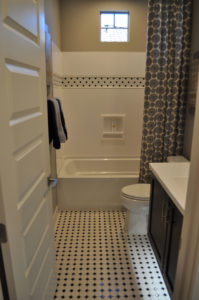
But if you think about it, chances are almost every visitor to your home will see your guest bathroom at some point. So it has a direct affect on how they view your home. And this is actually the most cost-effective room to create design drama, because the space is so small. A minimum investment can provide the maximum design impact. Let’s take a look at some of the guest bathroom designs in recent Fulton Home models to get some ideas of approaches you might want to take to give your guest bath some extra style.

First Impressions:basha-legacy-powder-room-3-web

Think about what your guest bathroom will look like from the hallway. Even if your visitors don’t actually use the bathroom, they will probably walk past and glance in. That first impression will have an effect on the entire hallway.

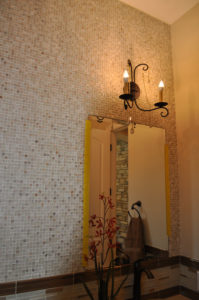
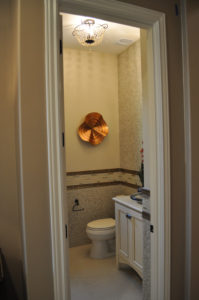
In this photo to the right, the eye is automatically drawn to the copper artwork on the far wall. Other features such as the tile and the mini-chandelier come into focus later. Altogether this is a luxurious and well-integrated guest bathroom.

This first bathroom involves a serious investment in options to create a feeling of luxury. This was appropriate as it was part of the Legacy series of homes, which was a luxury line. But you don’t need to invest as much in options as was spent in this model to create drama.

view-from-hall-web

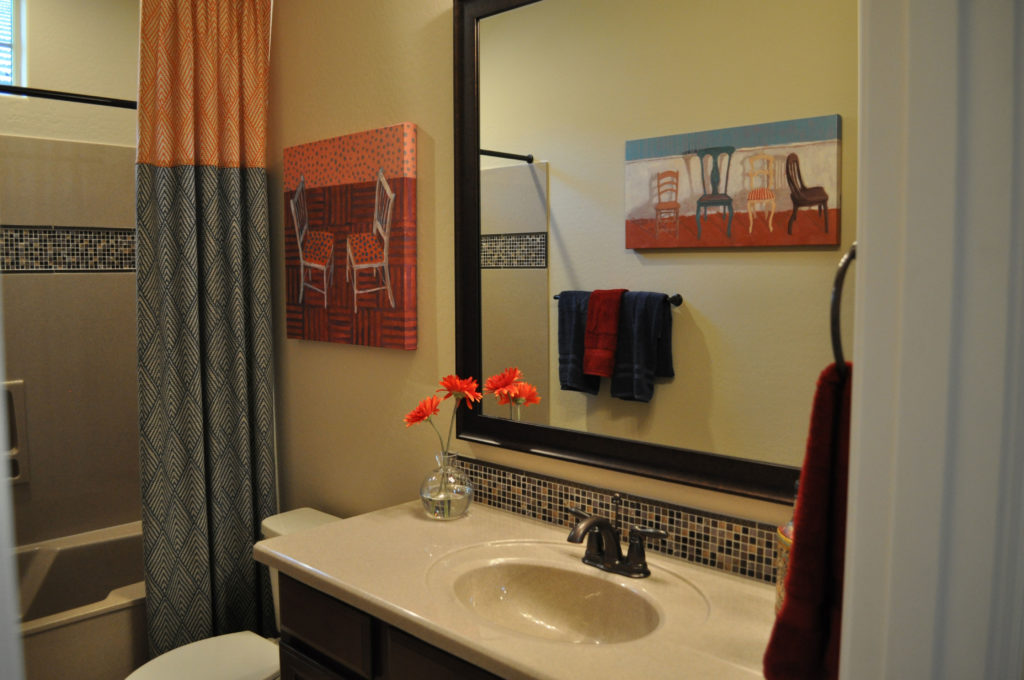
Take a look at the guest bathroom to the left. The vanity is nice-looking but fairly straightforward with a sink embedded in the countertop. The tub and surround are a solid surface which is less expensive than tile. But the tile chosen for the flooring and the coordinated tile inset added to the solid surface in the tub surround makes this bathroom pop.

In this case creativity and thoughtful style take the place of expensive options to make this bathroom stand out. Add an interesting coordinating shower curtain and some towels to emphasize the contrast and you have a guest bathroom that shows your personality without a big investment.

Lighting:basha-legacy-powder-room-2

Because of its small size, smaller light fixtures can have a big punch in a guest bathroom. And if you want to take a chance with a different look, a guest bath is a great space for experimenting. The simple wall sconce on the right adds a touch of charm in a guest bathroom. After all, this is not a space where you need bright lights, and a gentle glow is flattering when people look in the mirror.

guest-bath4-web


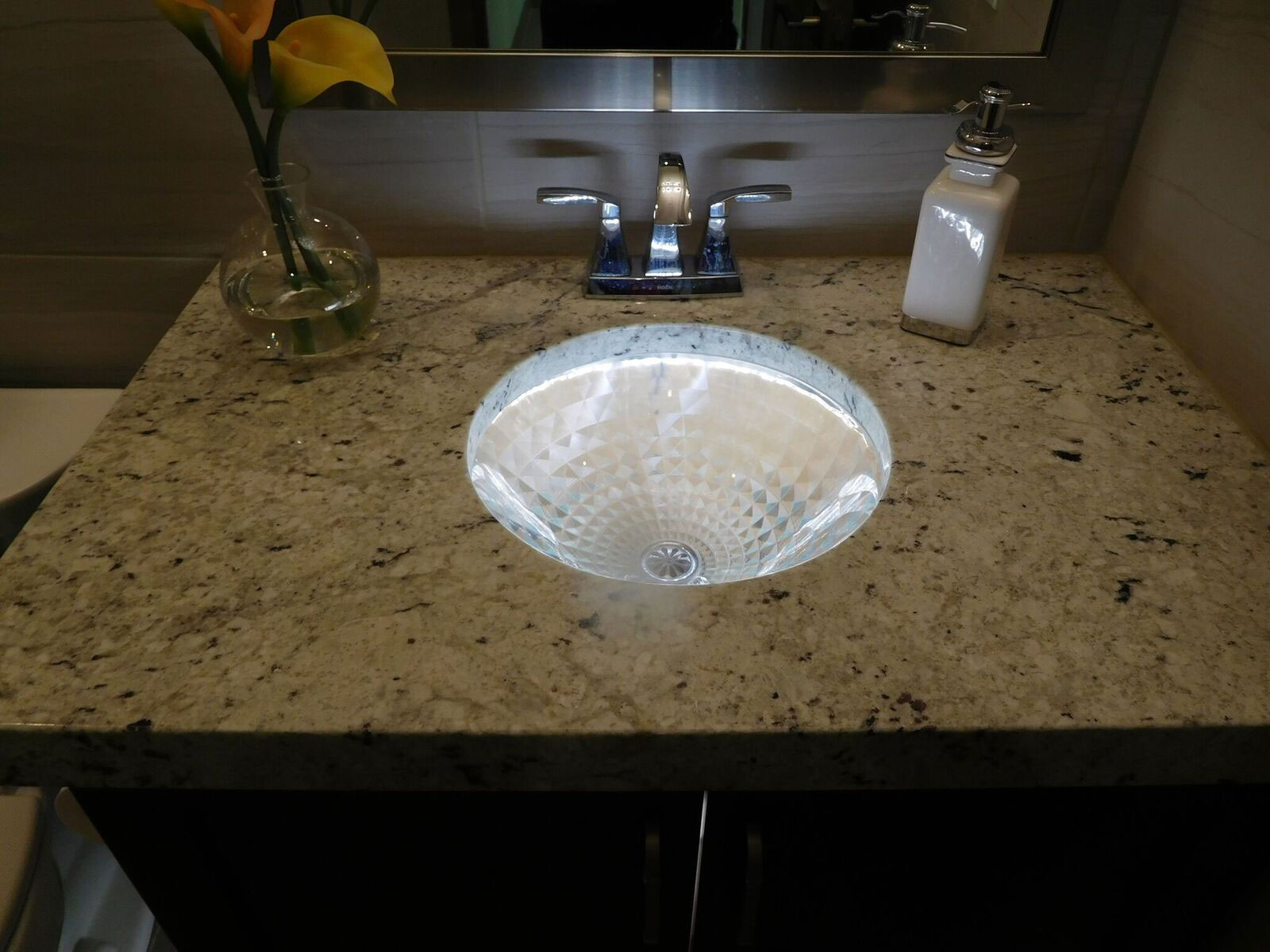
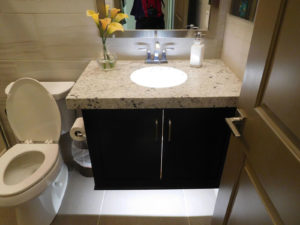
The photo on the left shows another fun way to use lighting in a guest bathroom. By adding a light under the vanity, the room doesn’t have a blinding glare when a guest hits the switch, and the look is unusual and interesting. In this case the sink is also translucent – notice the photo at the top of this blog – so the light also makes the sink glow. This choice gives you the opportunity to add some drama to your guest bathroom while not taking up any additional space.

Tile Trim:basha-legacy-powder-room-1

Whether you choose a simple row of tile to outline your vanity or expand your tile choices to cover an entire wall, tile has a special place in many bathrooms. In the photo to the right you can get a closer look at the Legacy bathroom we visited above. In this case a full wall of tile is complemented with a rich row of glass tile trimmed with a darker border just above the vanity, serving as a backsplash. It provides the feeling of wainscoting and pulls every element in this room together. The border also adds some welcome contrast.vanity-cropped-web

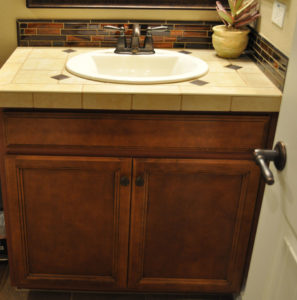
You don’t need to use this much tile to have a design impact in a guest bathroom. Take a look at the vanity on the left. The countertop uses a simple tile pattern to create a charming rustic feel. Then a six-inch backsplash of narrow rectangular tile picks up the tones of the vanity’s wood finish to create an integrated design element that makes this guest bath memorable. The oil-rubbed bronze hardware with its rustic flavor makes so much sense with this look.

Finishing Touches:bath-2-web

Don’t stop with the design elements. Once you move in, take the time to find the right art and accessories to complete the look in your guest bathroom. In the photo above, the design of the bathroom is enhanced by the choice of shower curtain, towels, art and accessories.

Notice that although the design itself is neutral, it left the homeowner open to introduce color into the room. By bringing in orange-red and the grey-blue, the neutral elements actually connect with the color palette. While you don’t need to be afraid to pull color into your design choices, if you would rather keep your permanent options neutral, think about what colors you will want to bring in with more temporary elements later. You may want to bring some of those colors with you to your design appointment.

Above all with a guest bathroom, have fun! It’s the smallest room in your home so it’s OK to take a few chances. And those extras aren’t going to break the bank with the minimum square footage involved. So as you wander through the Fulton Design Center, if you spot a special sink, faucet, tile design or light fixture you can’t resist, why not consider the guest bath for its home?


Create Cozy

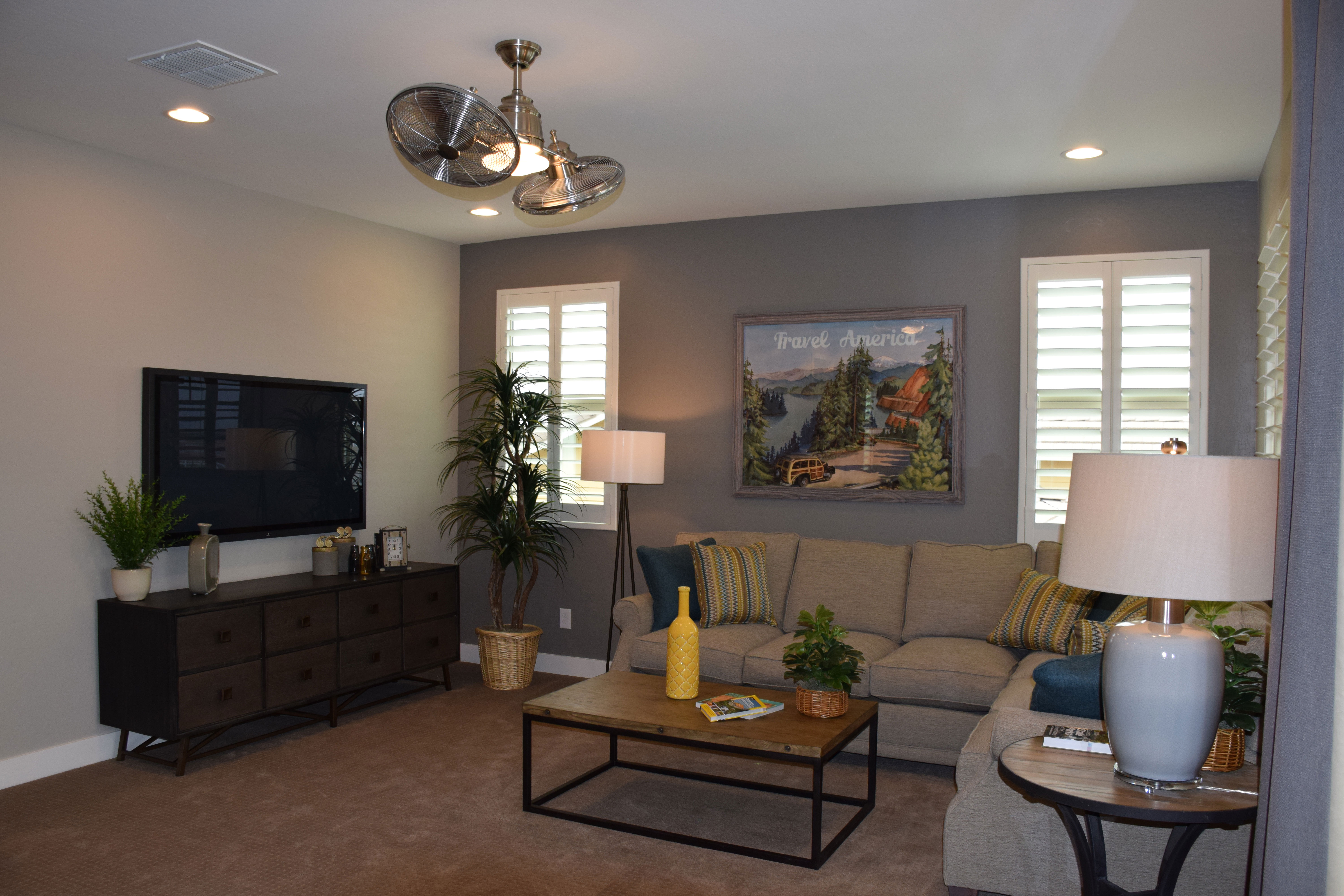
wWarner-Groves-at-Morrison-Ranch-074 - Copyit’s not hard to make your family room to feel cozy and welcoming like this one. Here are some suggestions to bring the cozy into your home.
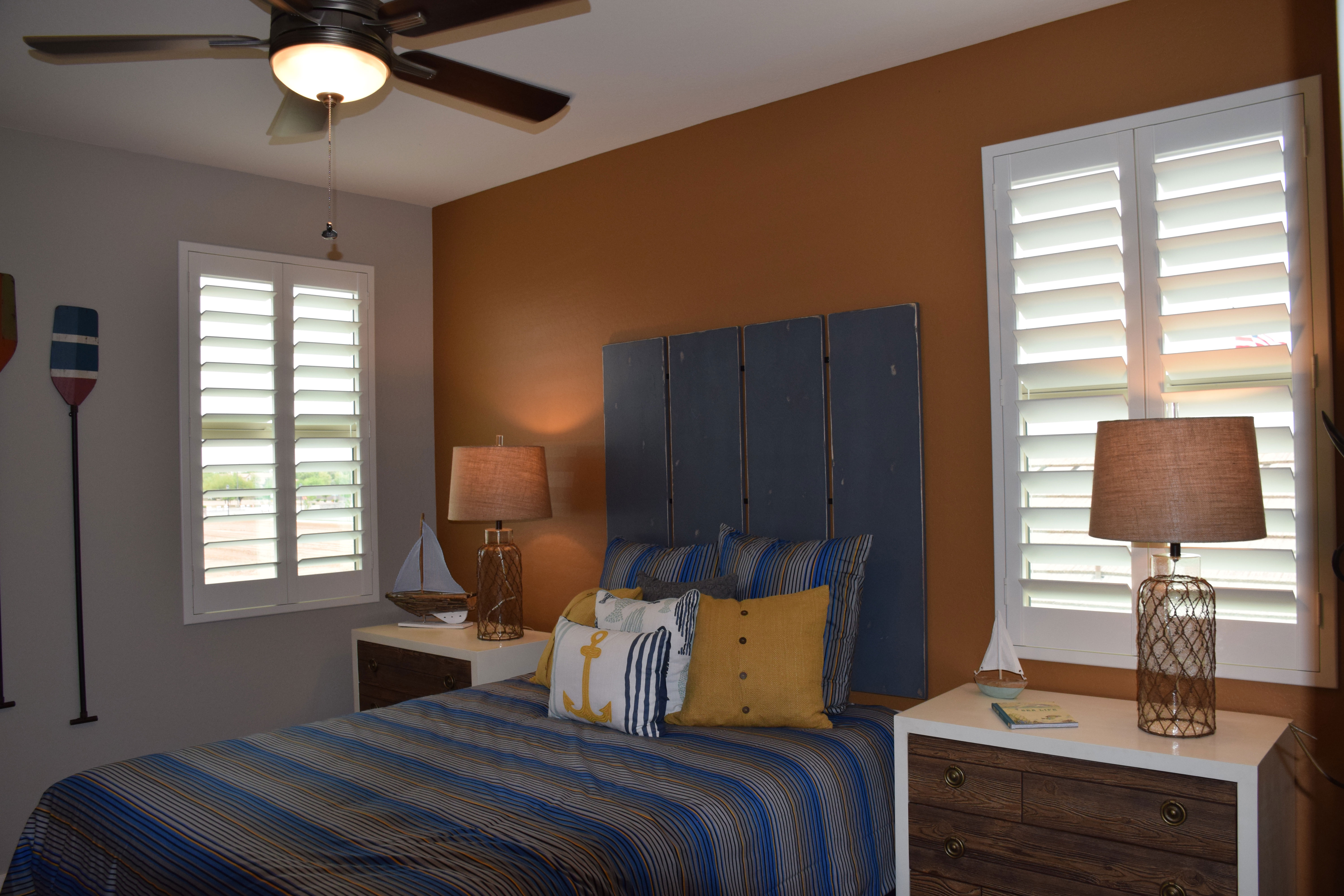
Darker Walls: You may have heard that darker walls make a room feel smaller. Not true. Instead, dark walls make you feel more secure and enclosed. The dark grey wall in the back adds warmth even though it is a cool color. It also provides a nice contrast to the bright windows.

Comfortable Upholstered Furniture: Getting comfy is an important part of feeling cozy. This plush sectional offers plenty of room to sit or stretch out. Throw pillows add comfort. You can tuck one or two under your head or at your feet on the coffee table.

Floor and Table Lamps: Ceiling light fixtures alone can’t add the ambiance that floor and table lamps can. Set your ceiling lights at a low level and turn on the lamps to create a cozy feel to any space.

Low Furniture: The television, coffee table and console are all close to the ground. This means that you can sit on the floor and still access everything. It’s an inviting space for lounging.

Carpeting: The choice of carpeting or a large rug adds softness to a room. Once again, a comfy soft flooring surface invites lounging on the floor.

Make your family room a place where friends want to linger. Create a cozy space for relaxing and fun evenings with guests or just family. Visit the models at Warner Groves at Morrison Ranch for a closer look.

Bedroom with Nautical Theme

wWarner-Groves-at-Morrison-Ranch-070Decorating with a theme makes a room fun, and this nautical option offers lots of choices for colors and accessories. Let’s take a look at this inviting bedroom above to get some ideas.
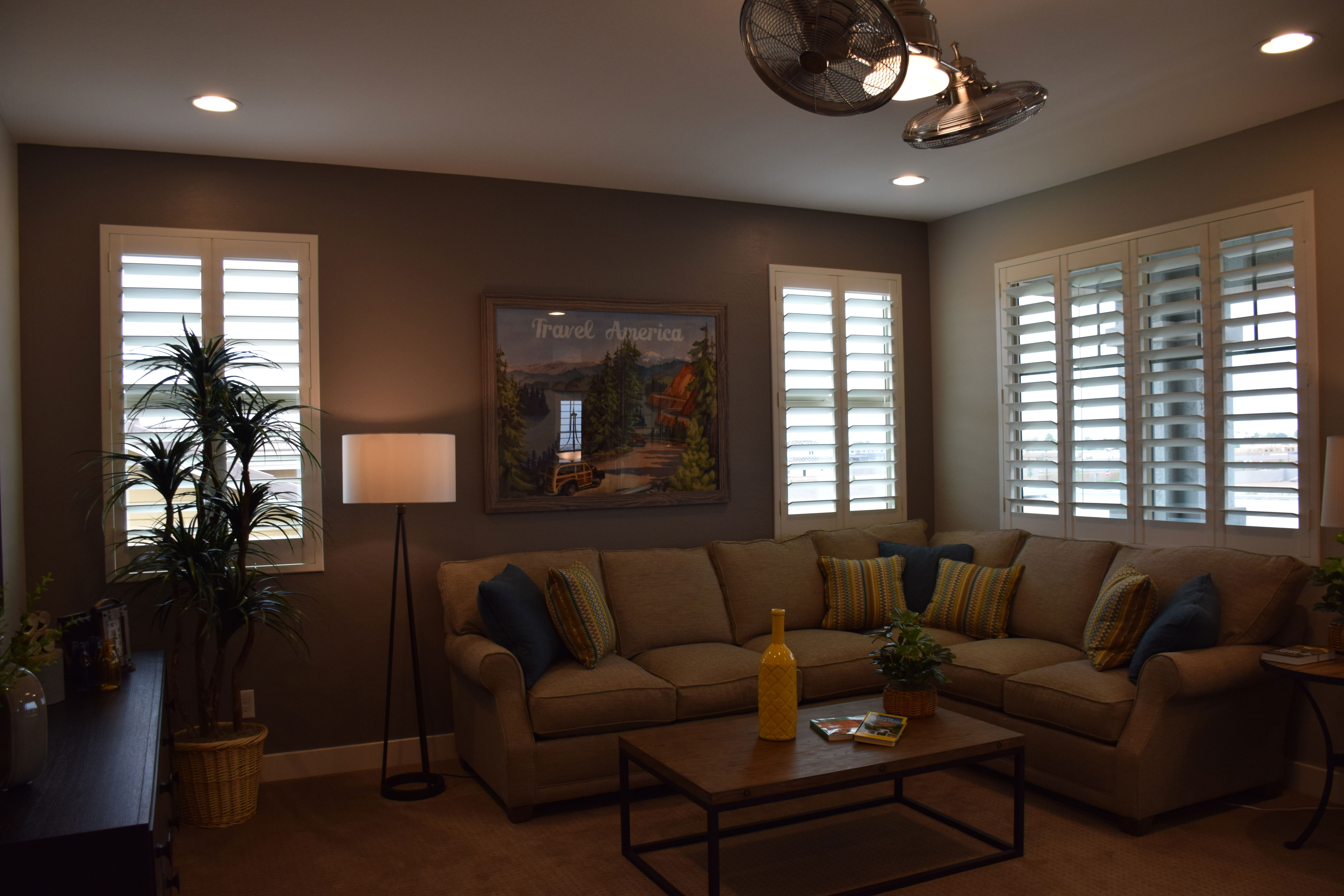
Color scheme: Blue is a given. You want to capture the color of water when you bring in a beach/boat theme. The secondary color – the focal hue on the back wall – captures the feeling of sand.

Patterns: Notice the wave pattern on the bedspread. This gives the feeling of water in the room. The woven bases on the table lamps remind you of fishing nets, bringing in another element of the ocean to this beach-like bedroom.

Accessories: An anchor appliqued on the throw pillow certainly brings a nautical element into the space. Several model sailboats also contribute to the mood. A final fun element comes from the oars hanging on the walls. The paint choices make these items particularly interesting, Creativity certainly came into play in this space.

You don’t have to live on the water to bring an oceanside feeling into your home. With a little planning and some flair, you can create a beach space even if you live inland. To see this room in person, visit our Sycamore model in Warner Groves in Morrison Ranch.

Gold Tones Warm up Family Room

wWarner-Groves-at-Morrison-Ranch-072 - CopyWhen you want to create a warm living space, consider choosing gold as the primary color. The hue fills a space with warmth. It also lends a sense of light.

In Renaissance times, furniture and accessories were often covered in gold leaf, creating a sparkle to any space. Today gold leaf is less common, but the choice of a blend of gold tones still works in any room.

Let’s start with the gold sofa. This sectional is the primary piece of furniture in the room, and it sets the feeling for the entire space. Every other element is built around it. The pillows provide a strong contrast with the sofa and also introduce the darker and lighter elements present in the room – navy blue and a bright yellow-gold.

The cocoa color on the back wall really helps the sofa to pop, and complements the mid-tone gold carpeting. This medium shade for the carpeting is a smart choice – not too dark but dark enough to maintain the mood in the room. All of the major elements hover in a mid-range, but then the pops of dark and light tones in the artwork and accessories keep the room interesting.

Notice the artwork. It depicts a natural scene with enough bright colors to draw the eye. Pieces such as that and the bright yellow bottle on the coffee table help make the room shine.

Decorating a room with a single color makes it restful and inviting, but be sure to add those color surprises to help the room sparkle too!