Creating a Focal Wall Behind the Bed

Do you want your bedroom to make a statement? In a bedroom the focus should be on the bed as it is the feature of the room.  When designing a master bedroom, builders often create one long wall to accommodate a king size bed and nightstands. If you tour older homes there may not be such an obvious place for a bed in the room. This is also the case for standard bedrooms.  Creating a focal wall in a bedroom will anchor the bed in the room.

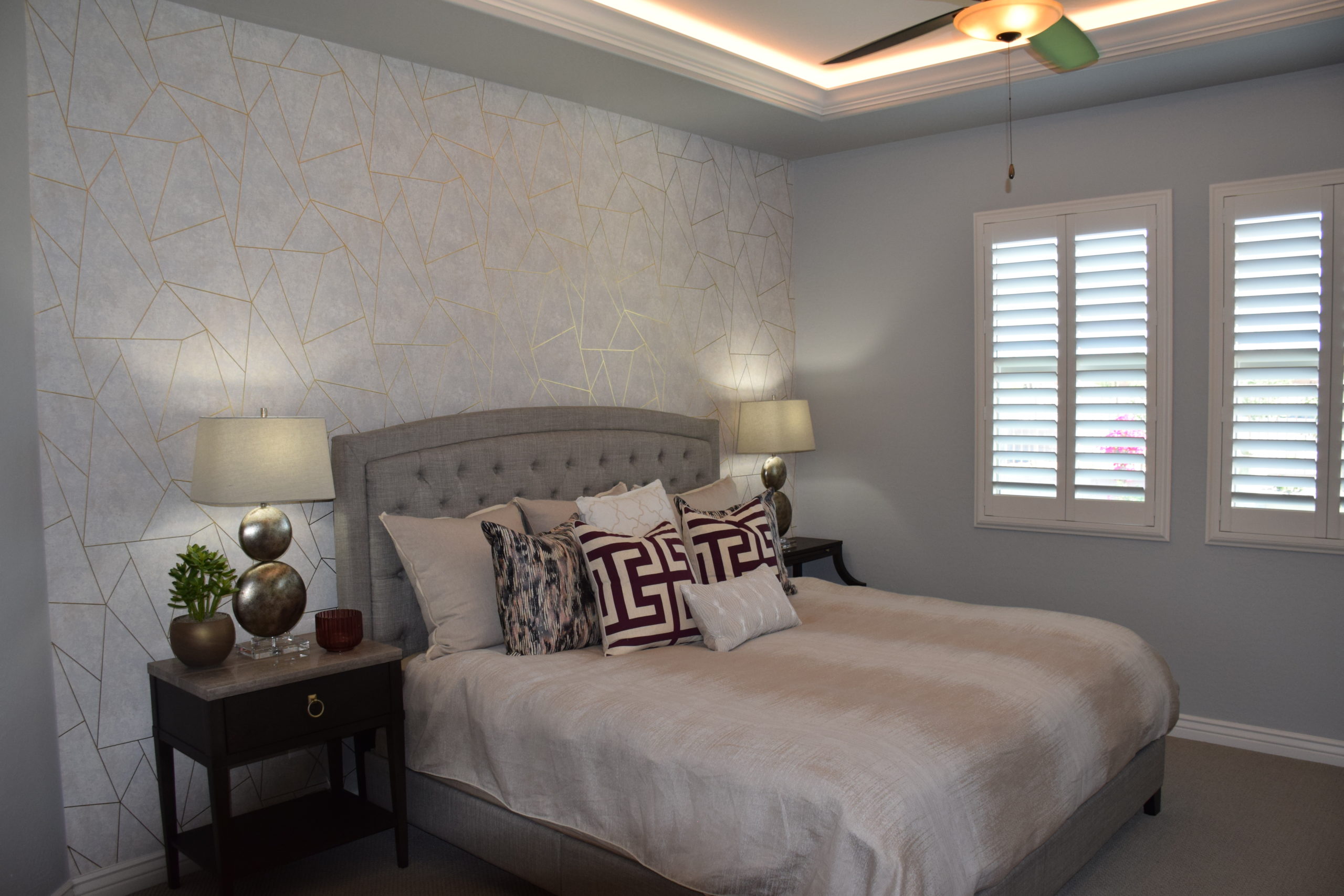
This bedroom has a decorative wall of wallpaper behind the bed. This creates visual interest for your eye to focus on. The pattern in the wallpaper behind the bed adds a design element that gives the room some interest and personality. Neutral bedding and carpeted floors keep the eye on the feature wall.

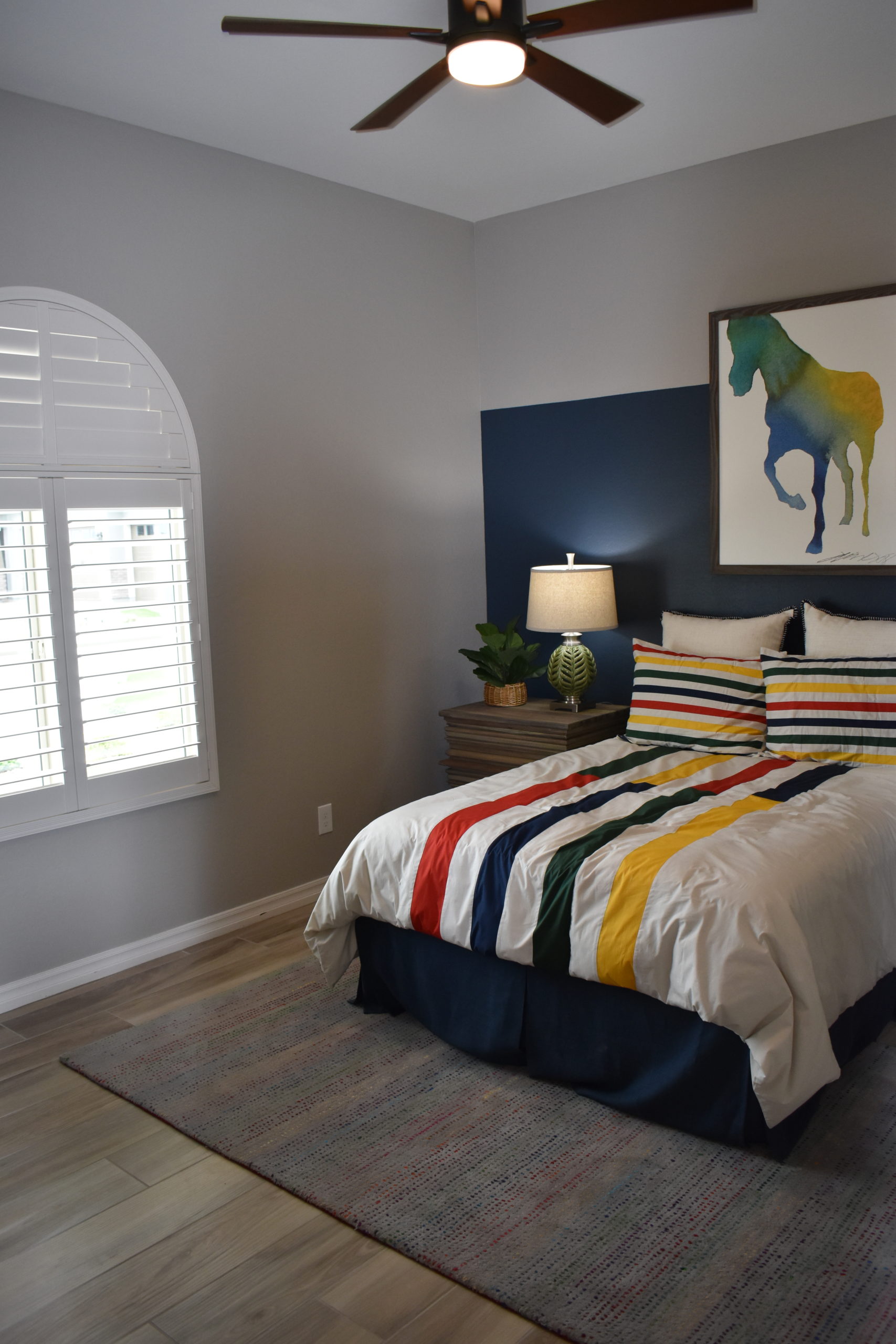
When it’s time to change the look and feel of the room, changing out the focal wall can be a lot less expensive than replacing the furniture in the room. If wallpaper is too strong of a design statement for you, consider using paint to create a focal wall behind the bed. You can coordinate the wall and linen colors or use a contrasting color for the walls to help it really stand out. Pattern, color, and texture can all be used to create a fantastic feature wall.

Sometimes the best place for a bed in a room is in front of a window. The old rules of design said you should put a bed in front of a window, but today’s design rules are more adaptable.  If you do put a bed in front of a window, use the curtains to frame out the bed and window to create a focal wall.

Choosing Lamps for Your Home

Duncan’s Point Model

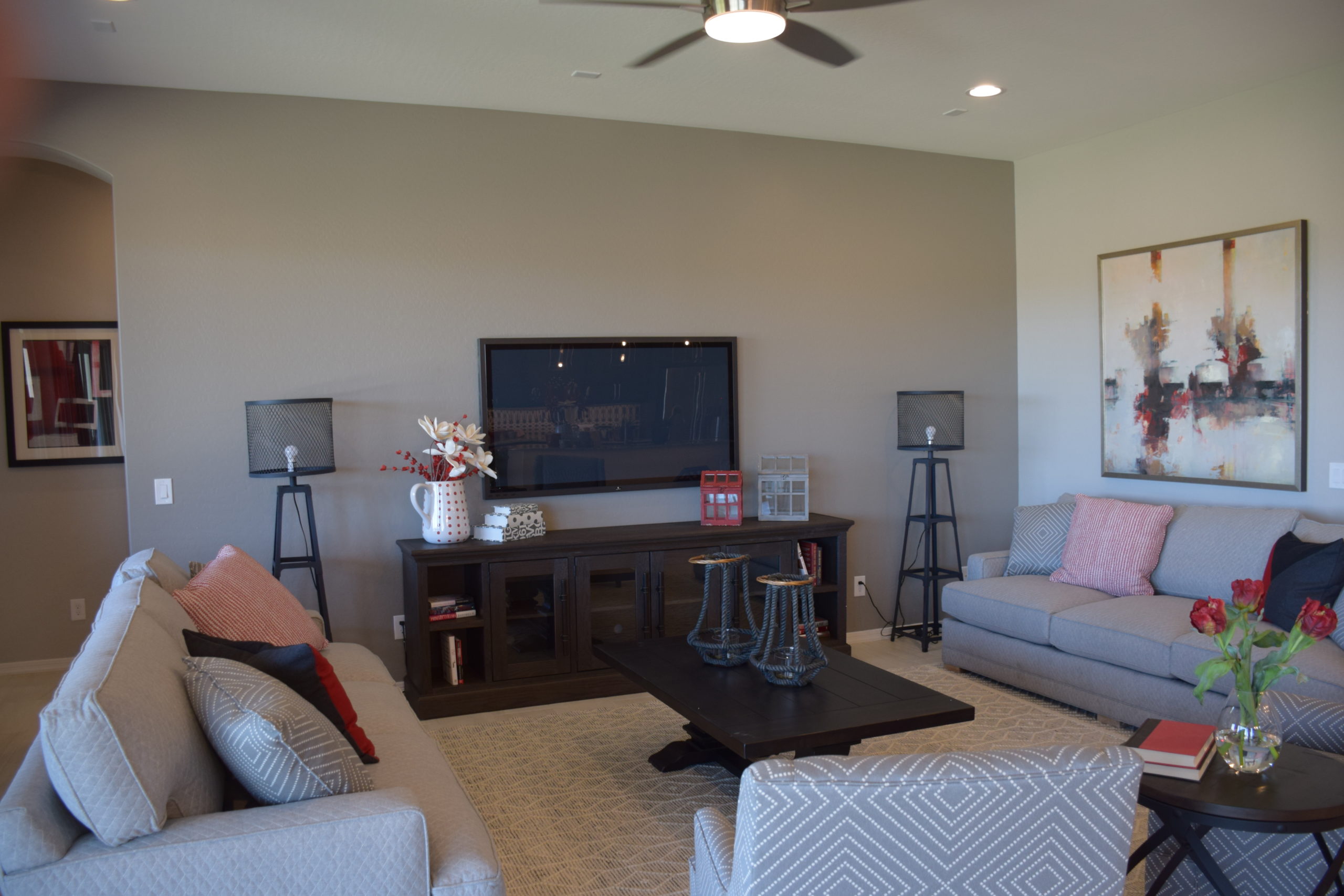
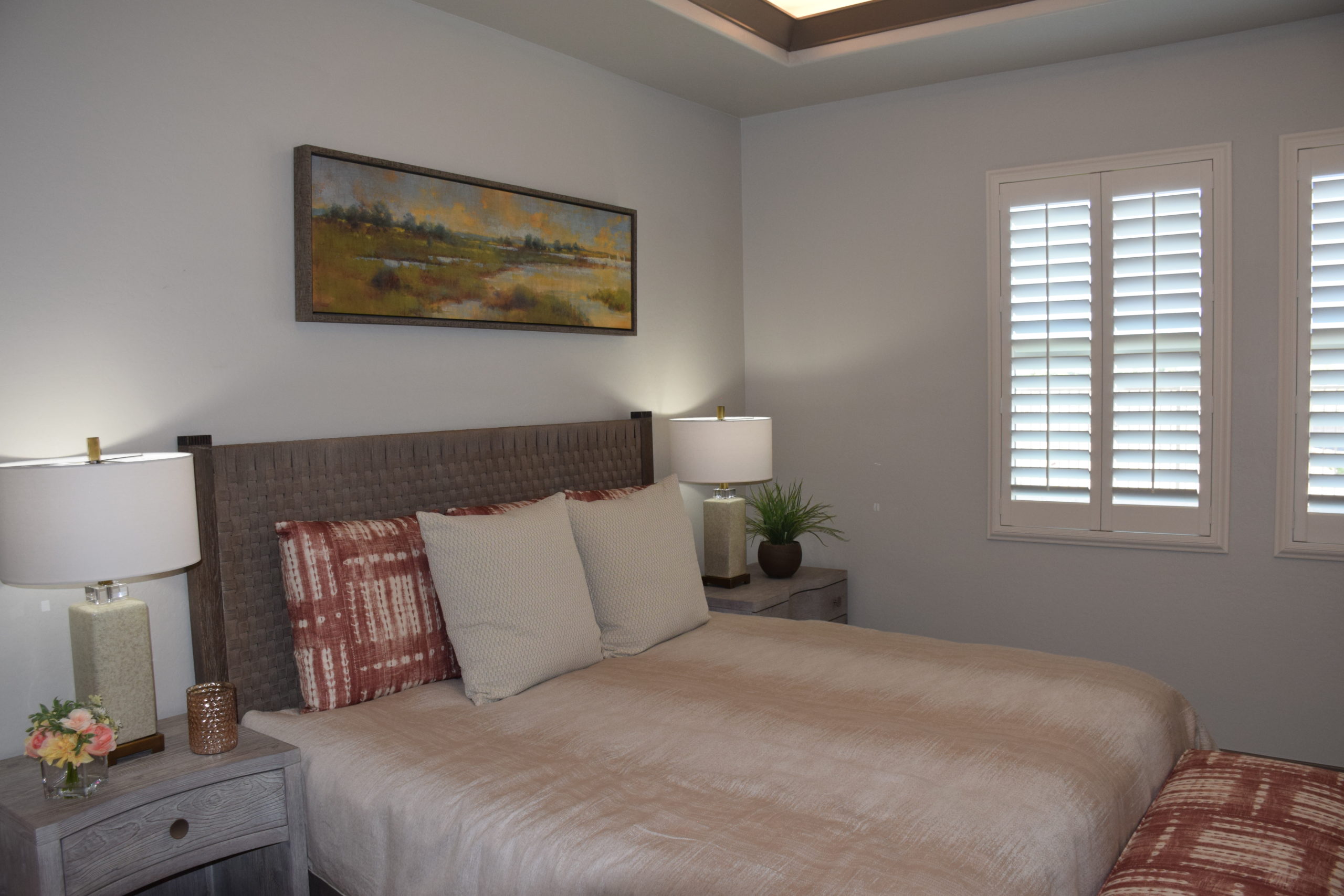
Lamps are some of the finishing touches you will purchase for your room when decorating. However, do not discount their importance to your rooms design. The right lamp and bring your room together perfectly. There are three main types of lamps to choose from—table lamps, floor lamps, and hanging lamps. Depending on the space you are decorating, the look you are going for, and how much light you will need the lamp to provide, one of these three types of lamps should suit your space.

The first thing you will want to do when deciding on what lamp to purchase is the size of the space it will be going. If it is a table lamp, be sure to measure your table so that you don’t get a lamp that overpowers it, or is too small to even be noticed. For hanging lamps and floor lamps the principle is the same thing, you will just be considering a different area.

Next you will have to decide what kind of design you want for your lamp. There are so many choices out there and it can seem overwhelming but before you begin browsing sit down in the room and look around you. What is the theme of your design? Do you even have one or is it more eclectic?

Consider that glass bases will look lighter in your space and can work really well with modern designs. Wooden and metal bases offer a heavier feel to them and work well in more traditionally decorated rooms.

Finally, you will want to figure out what the function of the lamp is. If your lamp is going to be the main source of light in your room, then you will want to go for a lamp that is both brighter and larger. A floor lamp or hanging lamp would work well in this situation. If your lamp’s purpose is more for bedside reading at night you should look for softer lighting like a small bedside table lamp with a low glow. Happy shopping!

Bright Ideas on Lamps!

Harris Beach Model

Lamps are some of the finishing touches you will purchase for your room when decorating. However, do not discount their importance to your room’s design. The right lamps can bring your room together perfectly. There are three main types of lamps to choose from—table lamps, floor lamps, and hanging lamps. Depending on the space you are decorating, the look you are going for, and how much light you will need the lamp to provide, one of these three types of lamps should suit your space.

The first thing you will want to do when deciding on what lamp to purchase is the size of the space it will be going. If it is a table lamp, be sure to measure your table so that you don’t get a lamp that overpowers it, or is too small to even be noticed. For hanging lamps and floor lamps the principle is the same thing, you will just be considering a different area.

Next, you will have to decide what kind of design you want for your lamp. There are so many choices out there and it can seem overwhelming but before you begin browsing sit down in the room and look around you. What is the theme of your design? Do you even have one or is it more eclectic than that?

Consider that glass bases will look lighter in your space and can work really well with modern designs. Wooden and metal bases offer a heavier feel to them and work well in more traditionally decorated rooms. The only way you’ll know what style to look for is to decide what will work best in the room.

Finally, you will want to figure out what the function of the lamp is. If your lamp is going to be the main source of light in your room, then you will want to go for a lamp that is both brighter and larger. A floor lamp or hanging lamp would work well in this situation. If your lamp’s purpose is more for bedside reading at night you should look for softer lighting like a small bedside table lamp with a low glow. These three steps should help ease your lamp buying process.

Tips for Monochromatic Decorating

Monochromatic decorating has a certain sophistication level that is perceived as elegant and classic. If you are not careful this style can easily become dull and lackluster. Let’s take a look to find out how to successfully pull off this look.

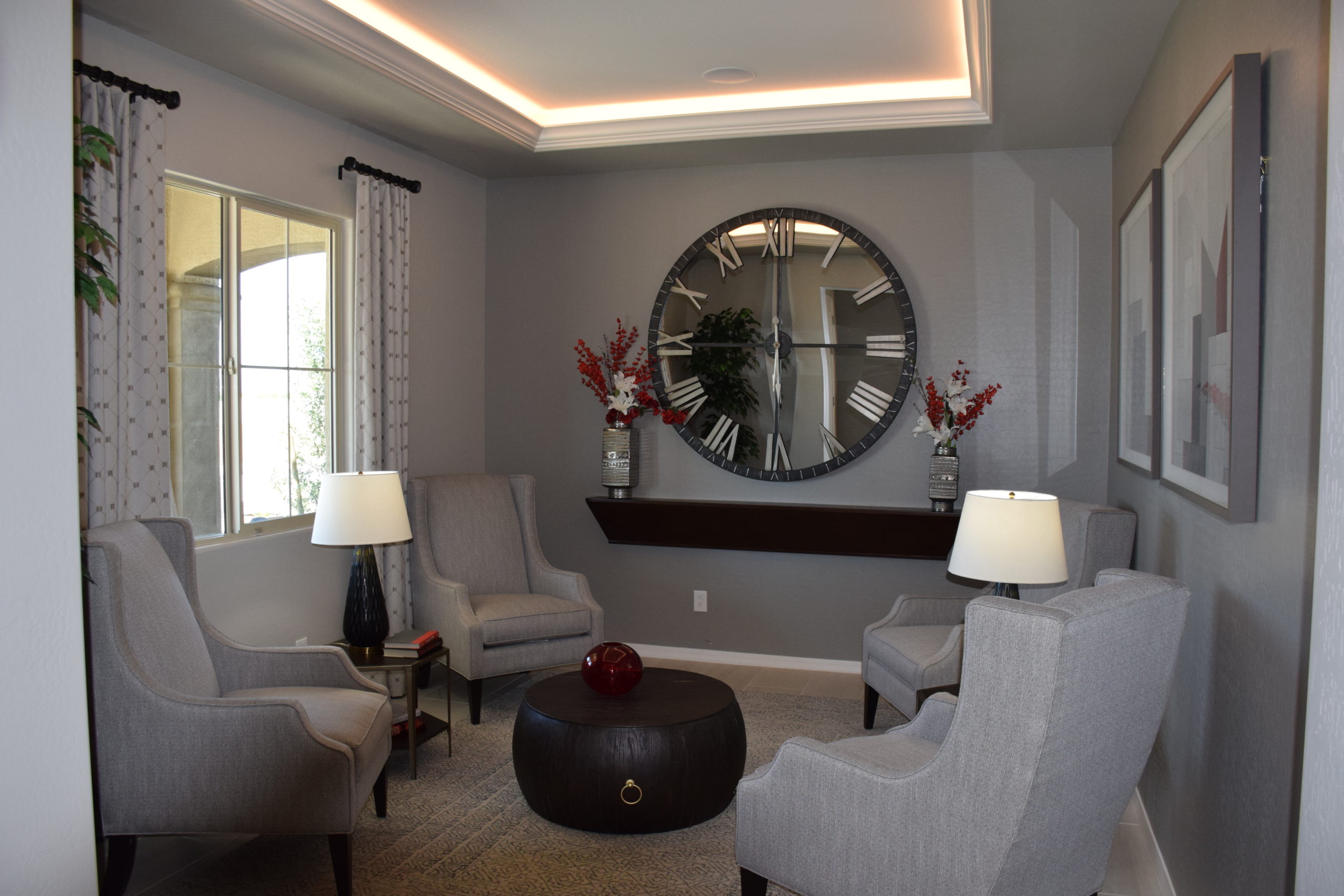
The most important factor in this style of decor is to create plenty of contrast. Contrast can be created by using light and dark monochromatic colors. An example of this could be contrast created with the help of the dark trellis or geometric pattern on accent pillows and dark fabric used on the drapery. Contrast could be made with a dark tray on a white table. An area rug with thin dark stripes is another example. Espresso brown is a common color of contrast against light colors and white.

Textures and layering are also important when decorating a monochromatic style. Example: Upholstery fabric on the sofa with a nice textured fabric, paired with different fabrics on the accent pillows. If the fabrics in this example not been mixed, the sofa would be washed out and boring. Another example is drapery panels coupled with the sheers. The can create an in-depth layer of texture and contrast.

The accessories in the room can also create the contrast we are looking for. Do this with glass and a little bit of shiny metal. This can add another layer of texture as well as some glitz. Glass items are always helpful when decorating in a monochromatic style.

Make sure to keep some life in the space. Fresh-cut flowers are an easy way to add life to a space. If no greenery appears in a monochromatic space it may feel cold and dull. In fact, all interior spaces benefit from plants, flowers and greenery. It is important to always place plant life within an interior!

Finally, the material of the floor is an important point to factor into the overall decorating scheme.  Be mindful to the contrast running through the remaining space.   

Let us know if you need further advice about your monochrome décor.  If you have an example, post a photo below!

Decorating with Mirrors

Elegant room interior with mirror on nightstand

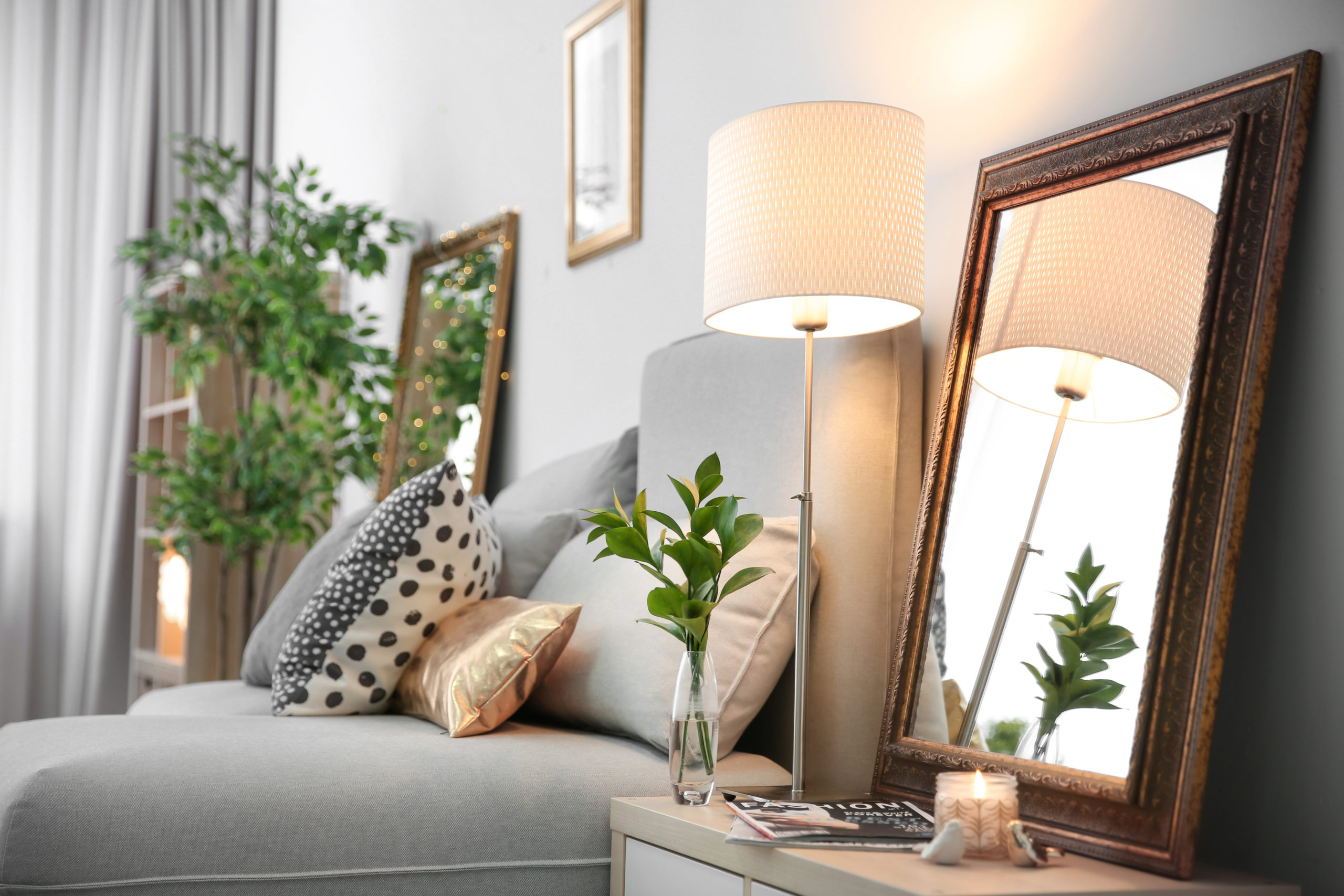
When it comes to decorating with mirrors there are never any rules. Yes, mirrors are a great way to quickly add visual interest to your space. Using mirrors as a decorative element has numerous benefits. It can instantly add depth and bring in natural light. In addition, mirrors can create a special effect when they reflect colors and paintings on adjacent walls. Here’s how you use mirrors to add style and increased light to your home.

Place a floor length mirror between two windows

Implementing a floor length mirror between two windows creates the illusion of a third window. This helps bring in more light to your space. By casually propping a large framed mirror against the wall creates a relaxed feel.

Use mirrors to enhance the room elements

You can use mirrors as an accent to the focal point in a room. For instance, by hanging a mirror over a fireplace mantel that extends to the ceiling, you can create a dramatic look. This is a great way to create emphasis in a neutral living room.

Hang mirrors on adjacent walls

Are you ready to make a powerful statement with your home’s decor? Try lining, two large equally sized mirrors on adjacent walls. This enables light to bounce all around the room. This look will especially complement the dining room area because it expands the area and gives the illusion of a bigger crowd around the dining room table.

Forget the medicine cabinet

Forgo the traditional medicine cabinet hanging over the bathroom sink. Instead, you can use a mirror of any shape to make a statement. A circularly shaped mirror can break up all the sharp straight lines and adds character.

When using mirrors as an accent piece in the home try to select mirrors with interesting shapes and unique frames for further customization!

How to Decorate with Split Complementary Colors

Timber Cove

Looking for ways to transform a blank canvas? A split complementary color scheme will no doubt add great contrast to a room which instantly brings interest and variety to your space. However, the downside is that you can end up with a design that looks busy or messy. If you’re interested in doing something different with your home’s decor, this article will show you how you can pull this off successfully.

What Is A Split Complementary Scheme?

In a split complementary color scheme, you’ll be using three different colors. This decor consists of two complementary colors and then the color that sits opposite from the complementary color on the wheel. For instance, yellow and green are complementary colors. Violet is the split complementary color of yellow. Usually, this palette will consist of two warm colors and a cool tone. However, you can adjust the temperature balance as you see fit. If you want to create a warm and welcoming atmosphere then you should use more of the warmer colors in your decor. Paint your walls and use this color in your furniture upholstery. On the other hand, if you prefer to set a cool mood then you would do the opposite.

Clashing of the Colors

Yes, using a split complementary scheme can be challenging especially if you’re not particularly skillful at using colors. To avoid a harsh clashing of colors, which can make for an aesthetically unpleasing look, make sure you don’t overdo the contrast. For a sophisticated look, you can tone down the hues of the opposite color. You can even use more of the two complementary colors and the third color sparingly.

Example: Blue, Violet, and Orange

Blue and violet are complementary colors. In a split complementary design scheme, blue and violet are the dominant colors. Orange should be used sparingly as an accent color to make your space come alive. For instance, in a bedroom, you could consider painting the walls a pale violet and covering the arches in blue. Perhaps your bedding would also be violet or blue and you can add orange pillows as an accent.

Simple Tips to Improve Your Interior

Does your interior need a lift? Not sure how to improve certain areas? Below are some simple tips that can uplift any room. You might be surprised how tweaking one or two things can lead to remarkable results.

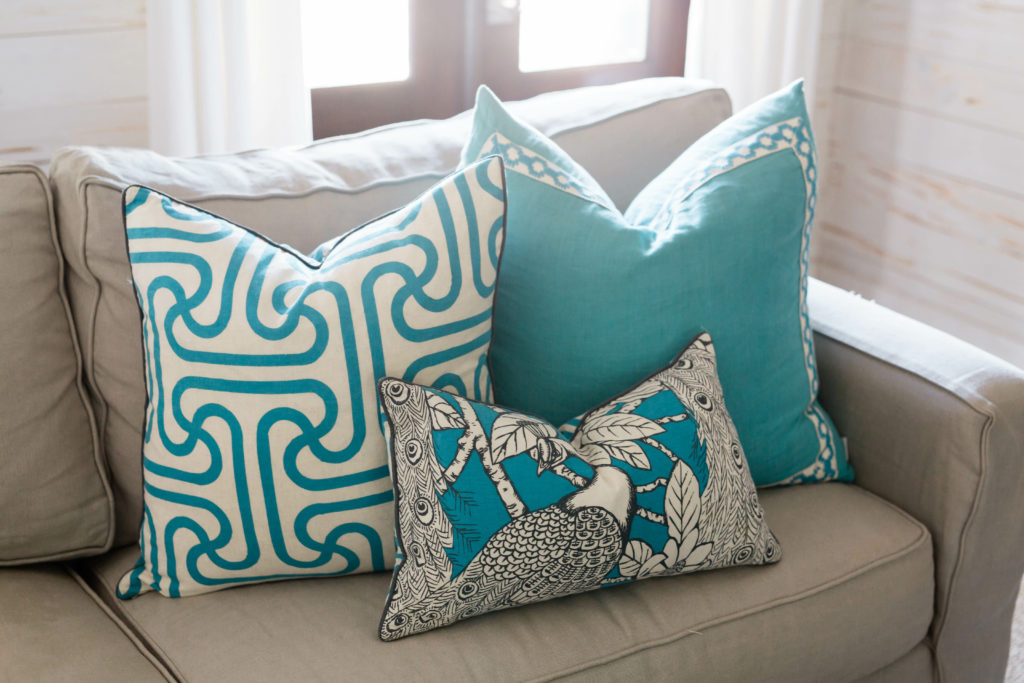
Fabrics and upholstery have the power to give the “just re-decorated” look without having to actually redecorate. Try brightly colored accent pillows, or recover the ones you have. Pillow slipcovers are easy to find online. Fresh, plump accent pillows act as a face-lift for any worn sofa or chair. Fabrics also have the power to create warmth, drama, elegance and variety to any room.

Window treatments allow you to control light, give privacy and improve insulation. They can also help improve the appearance of a room. Wish you had a higher ceiling? Install full-length panels higher above the top of a window. If you don’t want wall showing in between, you can add a valance that only hangs down an inch or so past the top of a window. Panels and valance combined make a window look higher than it actually is. Treatments made of formal fabric add elegance. Casual fabric gives a room a comfortable feel. Different types of blinds also have the power to create the mood of your choice. White plantation shutters add a classic look to any window.

Try out one or all of the tips above! We would love to hear about your interior transformations!

Common Decorating Mistakes

You’re not alone! Common decorating mistakes are made time and time again. This post may help you by pointing out common mistakes so you can avoid making them!

If you don’t love it, Leave it!: Do not use something that you don’t love. Just because something has been inherited or gifted and you feel it needs to be used, doesn’t mean you have to use it. If you don’t love something, donate it!

Define your own personal style: Don’t decorate according to the latest trend. Decorate around your personal style. You will enjoy your décor much longer than you would if you used a trendy style. Decorating around your personal style gives unique character to your interior.  If you’re sick of the white tile in the kitchen, replace it with a bright warming color.

Clear the clutter, Go chunky: Small accessories tend to make a space look cluttered and unorganized; not to mention the dust they collect. Simplify your accessories by replacing many small items with a few chunkier pieces. Chunky accessories make a space look clean because few are needed to replace many small items.

Research Color: Avoid making the wrong choice with color. Different colors spark different moods on a subconscious level. Research what colors you are considering for carpet, tile, paint, etc. in order to ensure the right color choice for the appropriate room and its use. (or ask our designers for help!)

The most important advice we can give you is “Done is beautiful”. Incomplete spaces look uninviting and affect the people that live there as well as guests. Try not to get caught up in deciding the perfect look for a particular space. Find a way to complete spaces; they can always be modified down the road.

Understanding Color: Warm vs Cool Neutrals

Warm vs. cool neutrals – which choice works best for your home.

Neutrals are wonderful tools when decorating. A completely neutral room can be both restful and sophisticated, while showing off different textures. A neutral room can also look like the person decorating it was afraid to take a chance with colors. One of the differences between the two rooms is an understanding that neutrals are not just a “safe” choice, but actually as powerful as colors.

A good place to start when analyzing neutrals is determining whether they are cool or warm. Just like colors, neutrals fall into these two categories. Warm neutrals include black, gold and tans, as well as beige. Cool neutrals feature white, gray, ivory and silver. Like colors, neutrals run on a continuum between cool and warm. If you’re not sure where a specific neutral falls, look for color undertones. If you see blue, it’s in the cool spectrum. Yellow or orange undertones take a neutral into the warm direction. Comparing neutrals can also help you decide the relative cool/warm nature of the tones.

Neutrals provide an effective background to a color-filled room and allow two challenging colors to live in the same space without competing. Many people choose neutrals for flooring for the flexibility they provide with the rest of the space.

When bringing a new neutral into an existing room or a new space, consider the neutral or neutrals in combination with the colors you will be introducing. Pull all of your samples together when shopping, or bring store samples home to see how they work in the designated space before making your final choice. Take time to evaluate everything to give you the opportunity to make the right selections. Neutrals can be remarkable – providing the glue that pulls a room together.

Creating a Stylish Desk

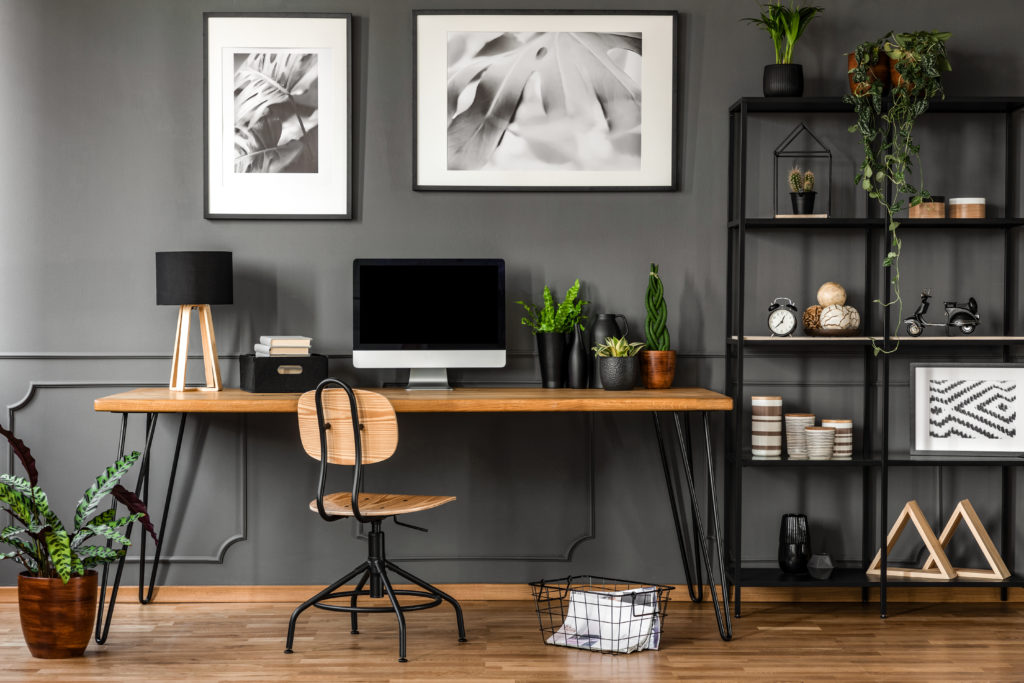
Posters on grey wall above wooden desk in natural home office interior with plants and lamp

A place to pay bills, check your email or work from home is a must for any home, especially these days. Ideally, you have an entire room dedicated to your home office. For some even if they have a spare room, they would rather just have a desk in the master bedroom or tucked into the corner of the kitchen or even living room.  If your home office is a desk in another room, it should be a stylish addition to the room that works with the room’s existing décor.

A workspace can be a designated desk with drawers and file space or it can be a beautiful table.  Traditional writing desks have a few small drawers under the top but open legs. Your furniture choices don’t have to feel like a traditional office outside the home. Choose what works best for your needs!

Reminder: For chairs with casters, a hardwood floor or a mat over the carpet makes movement easier and protects your floors. For chairs without casters, be sure to put felt protectors on the bottom of the chair legs or feet.

When decorating your stylish desk, consider a pair of lamps that make it feel like a console table. A mirror would be a nice addition above the desk to reflect light and break up the cream expanse of the wall. Or you could hang a framed artwork above the table to add color and pattern to the wall. The possibilities are endless!.