A Fresh Start on Organizing your Home: Keeping the Guest Bath Company Ready

From the Fulton Homes La Quinta Model

From the Fulton Homes La Quinta Model

Every homeowner with children has a dream of a guest bath that is always ready for company. Instead this bathroom, often the most convenient for children playing outside or in the main living area, ends up a disaster.

Sinks don’t stay pristine when dirty hands get a quick wash before dinner, and it’s almost impossible to find any child under the age of 21 who replaces the toilet paper when they run out.Towels also get grimy and often end up on the floor and mirrors may have multiple handprints. And if you have boys, at best there’s a 20 percent chance that the toilet seat is down at any given moment.

What can you do to discourage a messy guest bath and keep it nice and organized, ready for actual guests? Here are a few quick tips.

Close the door: The simple act of hiding the room will encourage family members to head to another location. They may assume it’s occupied. You can also use this as a code for your family – if the guest bath door is shut, that means that you want it to stay nice for expected company.

Invest in home disposable towels. In packages designed to rest on top of a towel rack, these will keep scruffy hands away from the nicer guest towels or the dressier rectangular disposable towels that sit on your sink.

If your bath is designed with a pedestal sink which provides no storage, add a small storage bin or chest to hold extra toilet paper and a box of kitchen counter wipes. In a pinch, you can do a fast sweep of the sink with one of those wipes.

Have a lined wastebasket in your guest bath. This encourages the family to place trash in the right spot, and a liner is easy to remove when guests are coming over.

You’ll never really solve the problem as long as your kids live t home, but you’ve made your life easier. You can’t expect your guest bath to stay the way you want it constantly, but with these simple steps you may be able to create a space that is ready for company – at least most of the time.

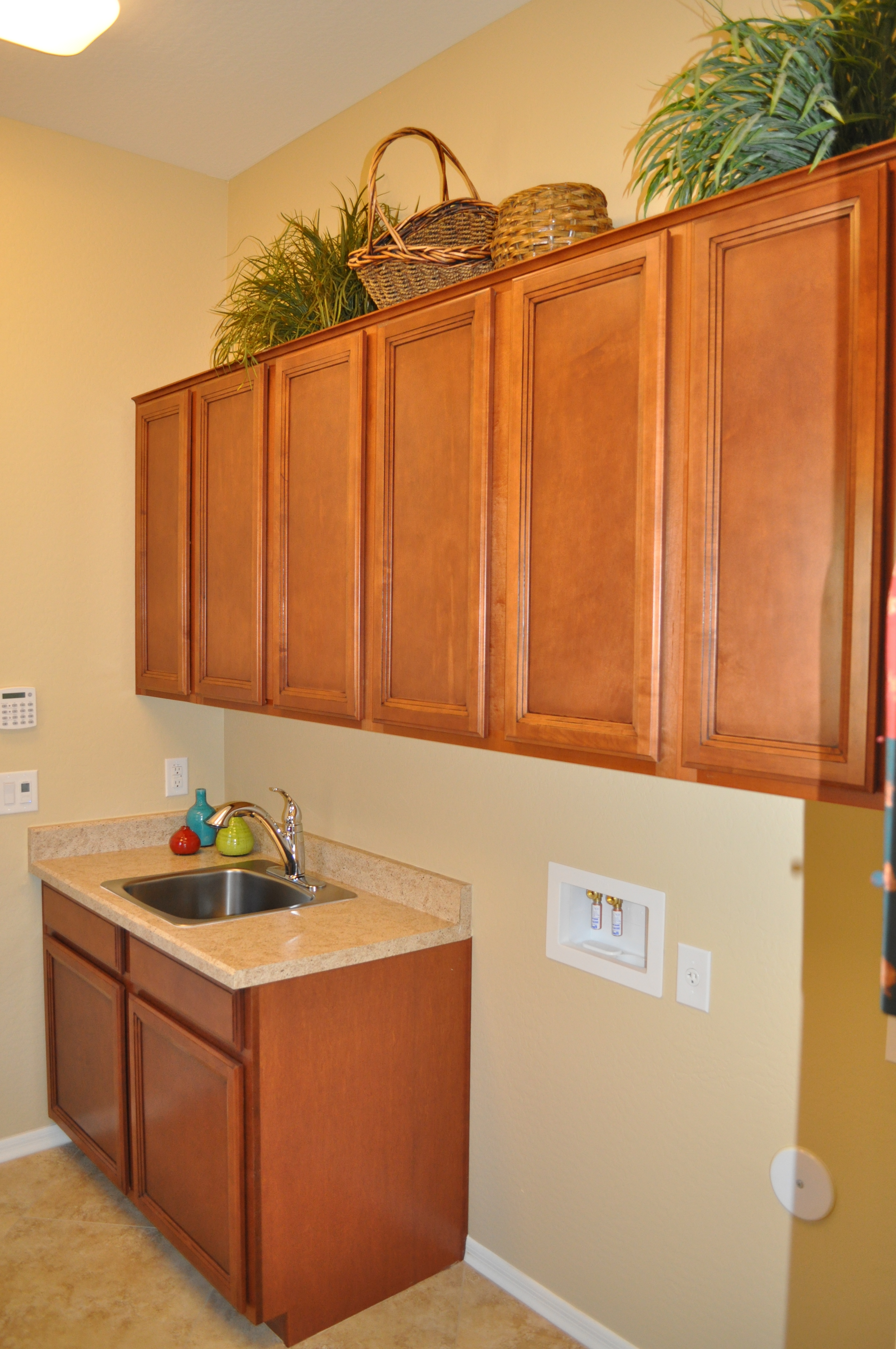
A Fresh Start on Organizing your Home: The Laundry Room

From the Fulton Homes La Quinta model

From the Fulton Homes La Quinta model

We use the laundry room a lot, but it is often the most thrown together and ignored room in the house. How about taking an afternoon to really turn this space into a functional and valued place in your home?

Start by thinking about what you would like to use your laundry room for besides laundry. With this Fulton Homes laundry room, you have many more cupboards than you need to store laundry supplies. Here are a few suggestions.

Store household staples. Light bulbs, paper towels, tools, sewing essentials, and office supplies all fit well in a laundry room. Assign cabinets for each category. If you want to keep things in place, you may want to label the shelves.

Store extra supplies. If you are a warehouse shopper, you may be buying dishwasher detergent and toilet paper in bulk. The laundry room provides a handy go-to place for those extras.

Store your craft supplies. If you enjoy scrapbooking, beading or other craft activities, this is a great space to devote to your craft hobbies. It’s easy to reach and yet out-of-the way when other things beckon.

Store projects for your children. These cabinets can hold various games, coloring books or other supplies you can pull out when your children complain that they’re bored. Shop sales at hobby and discount stores for little surprises you can use to entertain little ones on road trips or for sick days.

Use for gifts. If you are a year-round shopper for the holidays, these cabinets can store presents until it’s time to wrap them. It’s even a fairly safe space to hide your children’s presents since they spend very little time in this room.

Of course, you will also want to store detergent and stain-fighting sprays and anything else you use to keep your clothes looking nice. But with a bit of imagination, your laundry room can hold so much more.

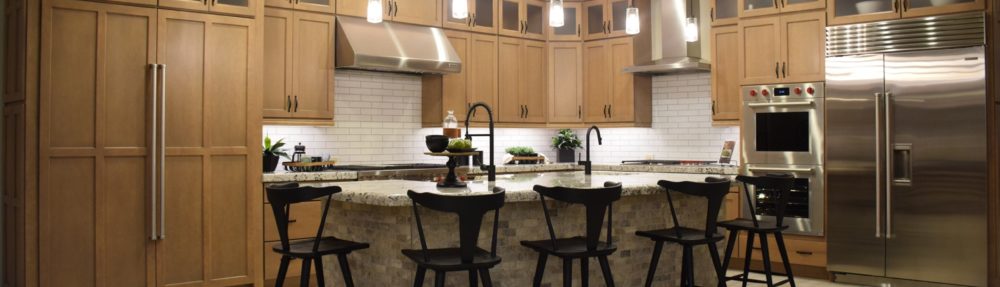
A Fresh Start on Organizing your Home: The Kitchen II

The large island with schoolhouse pendant lights, rich dark cabinets and light granite countertops combine to make this Fulton Design Center kitchen memorable.

The large island with schoolhouse pendant lights, rich dark cabinets and light granite countertops combine to make this Fulton Design Center kitchen memorable.

If you’re ready to organize your kitchen but are hesitant to engage in an all-out full-day redo, you can take baby steps that will leave you with a fully organized and functional kitchen. The following can be accomplished over a number of days or even weeks.

  • In a corner of your dining area or somewhere near the kitchen but still out of your way, place a large wastebasket and a box. These will hold your discards and giveaways.
  • Begin with one cabinet or drawer. Take everything out, wipe it down and put in new shelf paper if you desire.
  • Only put back those things that you want to keep there in the future.
  • Take a look at what’s left and discard or give away whatever you can.
  • Put the remainder on a corner of your countertop. If you want, you can stop here until the next day.
  • Choose your next cabinet based on what remains on your countertop. Which one is the logical place to put the bulk of what you have there?
  • Empty that cabinet and continue as before, wiping the shelves down and replacing what you feel belongs there, including those things that are currently waiting for their new home on your counter.
  • As you continue around the kitchen, are there certain groups of items that never seem to have a place? Perhaps you need to designate a specific cabinet or space for them. If they aren’t essential for your kitchen, consider another location such as the laundry room or garage.
  • Once you finish, do you still have leftover items on your counter? It’s time to decide whether you really want to keep those things or if they go in the giveaway box or boxes.
  • As you work, keep thinking of your specific needs rather than trying to follow arbitrary rules. For example, the bookshelves on the end of the island may be designed for cookbooks, but they may work better for your family as cubbies for the kids to put their homework and books for school the next day.

Yes, this process leaves your kitchen a bit up in the air for a while, but once you’re done you will have a space that matches your functional needs, with nothing extra cluttering up the room. So it’s worth it to bite the bullet and deal with the disorganization for a few days for the benefits at the end – a kitchen that works!

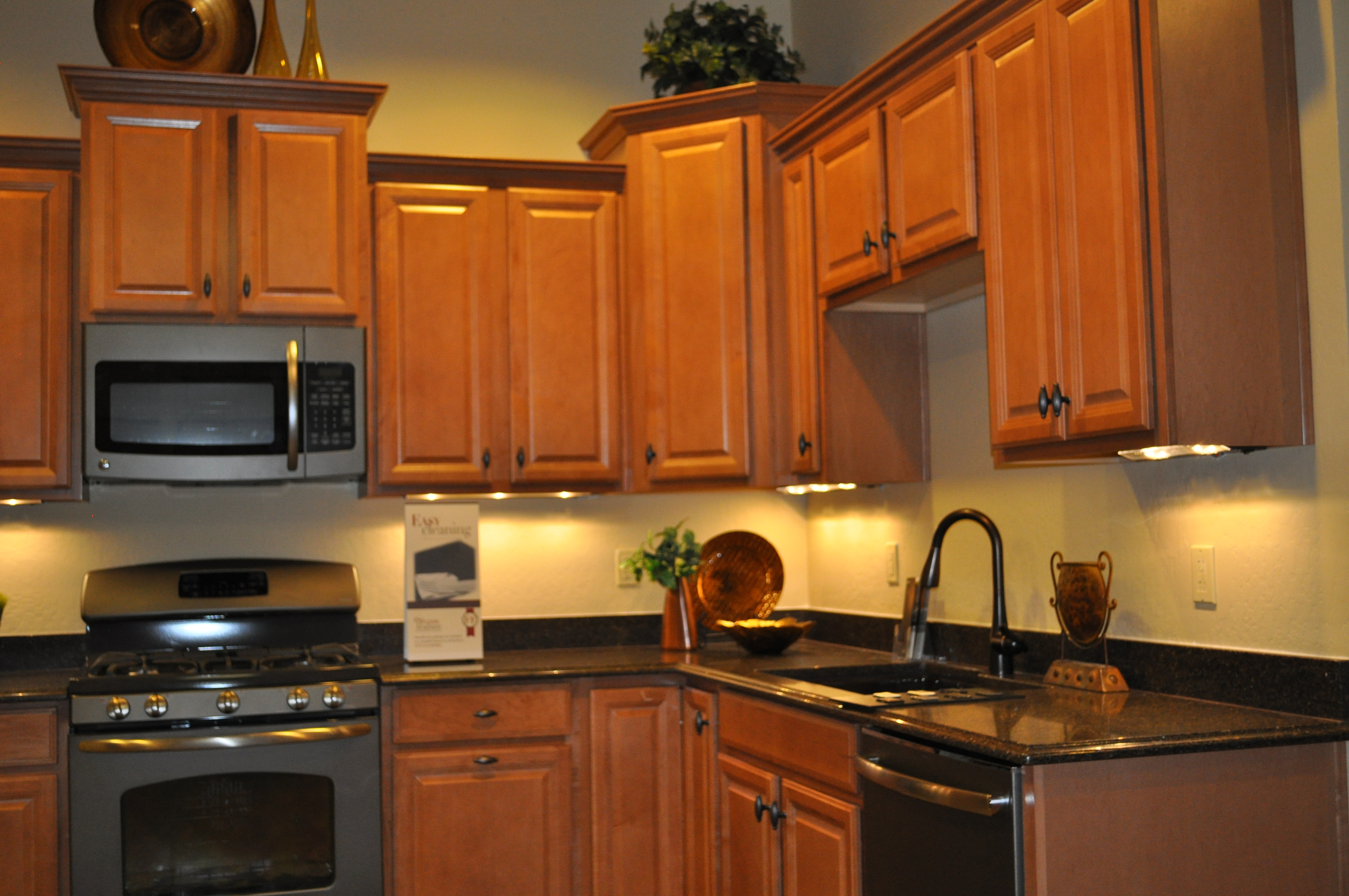
A Fresh Start on Organizing Your Home: The Kitchen

One of the kitchens on display at the Fulton Design Center

One of the kitchens on display at the Fulton Design Center

At first glance, getting your kitchen organized may seem like a daunting task. Chances are that when you moved in your goal was simply to get unpacked and able to make meals. Even if you had some plan of organization at the time, actually using your kitchen can help you discover that some items need to be rearranged. You have at least two ways to tackle your kitchen. See which one appeals to you.

Complete do-over. This is a full-day project, preferably with at least one other person to help as well. To make this work, try the following steps:

  • Clear off counters, placing any decorative items in another room for the day.
  • Have a bag ready for garbage and a box for giveaways.
  • Empty every shelf onto the counters and dining table.
  • Dispose of anything you don’t want or use in either the discard bag or giveaway box.
  • Wipe down counters and add or change shelf paper if desired.
  • Place the “sure things,” those items you already have a good place for, in their cupboards.
  • Thinking of function and utility, rearrange the other cabinets & drawers.
  • Determine if you need baskets or other containers for some items, and measure the space to know the size. Make a list for an upcoming shopping trip.
  • Measure your drawers for appropriate drawer dividers – these help keep drawers in shape once organized.
  • Compare the space left to the items left. Can you make them work? If not, consider more discards.
  • Put your kitchen counter accessories back, or not. Analyze what you actually want back in your kitchen.
  • Celebrate by going out to eat – you don’t want to mess up your newly-organized kitchen right away!

In our next organizing blog, look for advice on the second suggested method of kitchen organization. It takes longer but is less overwhelming.

A Fresh Start on Organizing Your Home: Your Calendar

22422960_SSo, as we move into 2014 and the holiday decorations are down, it’s time to dive into all those plans to organize your life. How about starting with your calendar?

With just a little effort up front, your calendar, whether tangible or online, can be the central planning tool for just you or for your entire family. Here’s how to start.

Select your calendar. If you choose a paper calendar, it should be one that breaks everything down at least by the week, so you have plenty of room for appointment locations and directions if needed. This is where an online calendar comes in handy. Many of them have plenty of space for whatever notes you need to make, as well as the option for reminder emails.

Fill in all family birthdays and special holidays such as anniversaries. Then run through and add all of the standard appointments such as kid sports practices or Monday morning meetings at the office. If there are a number of family members, you might want to assign each one a color so everyone can see their events at a glance.

Place a paper calendar in a good central location, possibly connecting it to a desk drawer with string so it can’t walk away. The kitchen is the best place because everyone walks through there at least once a day. If you keep your calendar on the computer, choose a program such as Google calendar that everyone can log into, so that access is easy.

Finally, make it clear that any appointments or events that are not on the calendar are not part of your responsibility. If a child needs a ride or a spouse wants you to attend a company party, there had better be a note about it on the calendar, after they’ve cleared your part of the task with you, of course. You can also set ground rules, such as that in case of conflicts; the first event posted on the calendar takes precedence, with exceptions to be negotiated individually.

While this is only the beginning of what you have to do to get organized, this small step is an important one in the right direction.

Set Resolutions for your Home in the New Year

10254941_SWhen you consider resolutions for the New Year, how about making some for your home?

Most people have things that they want to fix, change or add to their homes, so you could make 2014 the year that some of those dreams turn into reality. Here are a few examples.

Small maintenance tasks: A dripping faucet, weeds in the yard or even light bulbs that are burned out are easy to ignore but can be a constant irritant. Plan a day to fix those little frustrations that always seem to be postponed. Getting those done will make your home more relaxing.

Safety checks: Have you replaced the batteries in your smoke alarms? Do you have a fire extinguisher in your kitchen? How about a complete first-aid kit? Are some rugs or cords tripping hazards? It won’t take long to make sure your home is as safe as you can make it. You can find tips for keeping your home hazard free on the Internet.

Organization: Don’t feel obliged to get the entire house whipped into shape. Instead focus on a few areas that are particularly challenging. Maybe you empty and sort-out your junk drawer, or get your gardening tools organized in the garage. It could be time to dispose of all of those old cleansers and unsatisfactory cleaning products under the sink that you never use. Every place you make more functional will add to your pleasure in your home.

Special touches: Have you wanted to add scented candles to your guest bathroom? Maybe one wall is begging for some art. Pick out one or two areas that feel unfinished in your home and resolve to add those items that will make it look and feel the way you want.

If you include your home in your resolutions for 2014, your home will see improvement and you will find yourself happier living there.

Set Resolutions You Can Keep

5501054_SSome people make the same resolutions year after year, never sticking to them after the first week or so. If you visit a gym in January, for example, it is crowded with people vowing to get into shape. By March, at least half of them are gone.

If you want to make resolutions this year that you can keep, here are some suggestions to help you on your way.

Prioritize: Every one of the resolutions on the list above involves a big lifestyle change. No one can make that many changes all at once. So choose just one or two areas of your life that you want to improve.

Be specific: Instead of just saying, “Eat Healthy,” resolve to eat a salad for at least three lunches a week. In place of “Get a better job,” decide to update your resume. These are manageable and measurable goals.

Make a plan: If you want to start exercising, take a look at your schedule to determine where you can make the time. Consider working with a personal trainer to kick-start your efforts. Find a friend or two who want to add walking to their days and set up a walking group. The more steps you lay out the easier it is to get started.

Include rewards: Everyone can be more committed to making a change if a good bribe is involved. If you want that Kate Spade handbag, a day at a spa, or a haircut from the new expensive salon, or maybe just a Saturday afternoon with a good book, build in treats when you meet your goals.

Don’t limit resolutions to January 1st. Any time is a good time to make changes to improve your life. Start with one or two now and add others later. You can accomplish a lot one step at a time.

New Year’s Eve Party for Children

17888724_SFor many children, New Year’s Eve may seem like a mysterious adult event that happens while they’re asleep. But you can make the change to 2014 something special for your children without the champagne, and even without staying up until Midnight. Check out these ideas.

Take advantage of time differences. If you live in Central, Mountain or Pacific Time, you can have your children celebrate an earlier midnight – there will be a live webcast of the ball dropping in Times Square at this link, so you can watch the year change with your children and still get them to bed well before midnight.

Make some noise. Party and discount stores are ready for the New Year with noisemakers, streamers and confetti. Have a dress rehearsal before midnight. You can split the children into two groups, with the adults determining which group is the loudest or most enthusiastic. This gives the kids a chance to be extra noisy and energetic several times before 2014 hits.

Out with the old and in with the new. Have everyone write down all of the things that happened in 2013 that they want to forget, and burn them in a fireplace, fire pit, or fire-safe container. Then have everyone write down lists of what they want in 2014. They could tie their lists to helium balloons and release them just before the New Year.

Write predictions. Have everyone write down their predictions for themselves and others in 2014. Encourage silliness. Read the notes aloud, and then save them to read next New Year’s Eve. This could become a fun tradition for family and friends.

However you decide to celebrate, it will be more enjoyable if you include everyone in the family. And at Fulton Homes we all hope you and yours have a terrific 2014!

Unwanted Gifts

15334772_SDespite people’s best attempts to buy gifts you’ll love, almost every year someone will hand you a present that isn’t to your taste.

Whether the gift is something you already have or something you would never buy in a million years, you have a decision to make. What can you do to escape the kindness of others without filling your home with things you don’t want or need? Here are a few options.

Return it. Most stores will provide gift receipts if you ask. You may want to mention this casually to those family members and friends who purchase doubtful things on a regular basis. You can talk about how you always get gift receipts for anything you buy in case something doesn’t fit or doesn’t work. Even without receipts, most stores will accept returns for a week or so after the holidays. Practice the words, “Oh, what a lovely gift. Wherever did you find it?”

Re-gift it. The big cotton cardigan in the exact shade of green to make you look jaundiced may be perfect for your red-headed aunt. If it doesn’t suit you, that doesn’t mean that it won’t work well for someone you know. Think about it.

Schedule an exchange party. Get a handful of like-minded friends who have well-meaning givers in their lives and engage in a trade. You may already have a waffle iron or popcorn popper, but someone else could use it, while that curling iron is just the thing for you.

Just keep it. If you have the closet space, sometimes the kindest thing is to keep it so it can be on display for visits. If you have a guest room, that’s the perfect place for those items that aren’t really to your taste. After all, how often do you walk in that room?

Agree to stop exchanging gifts. There are times when the best gift is no gift at all. You could buy each other lunch or dinner or treat each other to a movie. And you never know, maybe your friend or family member cringes every time he or she opens one of your gifts too!

Think of Thank-you Notes

8388385_SAfter all the gifts are opened and admired, do you take the time to write thank-you notes to the givers? As a child, many of us were required to write thank-yous for any gift we received, and it was often a tortuous process. As adults, some of us have stayed in the habit, while others gave it up long ago.

No matter your age, thank-you notes are good manners and just a nice thing to do. Particularly for older people, this recognition of the time and expense they took to buy and send a gift can make their day. Everyone loves to get mail that isn’t a bill or advertisement, and a hand-written note is something special.

You can make writing thank-you notes easier and more fun for your whole family with a few simple tricks.

Give cards for thank-you notes to every family member as one of their holiday presents. These note cards can be small and match the personality and style of each person.

Make a list of each gift and who gave it for every person in your family. At the end of the present-opening extravaganza, everyone will have a record of who needs thank-you notes for which gift.

You can make these notes particularly special and memorable by taking a photo of every recipient holding up or wearing the gift and enclose it with the thank you. If you decide to email your thank-yous, which is getting more and more acceptable among younger adults, you can attach the photos to each email.

Write your notes as a family. If everyone received a present from Aunt Joan, do a round-robin thank-you with everyone contributing a sentence or two. Even little ones can draw a picture or write a couple of words. This way you can also help each other come up with good ways to say thanks for each gift.

Gifts are special and givers deserve the appreciation that a thank-you note shows. Take the time to make the celebration special for those people who take the time to think of you.