Spring Starts Early in Arizona: How to Prep Your Home Now for the Busy Season Ahead

In most parts of the country, spring preparation begins when the snow melts. In Arizona, spring starts quietly and much earlier. The cooler winter temperatures ease, the days stretch longer, and before you know it, the desert is warming fast. This seasonal shift creates a unique opportunity for homeowners. Late winter and early spring are the ideal time to prepare your home for the months ahead, before the intense heat sets in and outdoor projects become less comfortable.

Prepping early isn’t about rushing into major renovations. It’s about smart, intentional steps that make your home more comfortable, efficient, and enjoyable throughout the year. Think of this season as a reset. A time to refresh, maintain, and prepare so summer feels smoother and less stressful.

Here’s how to take advantage of Arizona’s early spring and set your home up for success.


Start with a Seasonal Walkthrough

Before jumping into projects, take a slow walk around your home, inside and out. Look at your space with fresh eyes. Notice what feels worn, cluttered, neglected, or simply ready for an upgrade. Winter in Arizona is mild, but dust, wind, and outdoor debris still accumulate.

Outside, check:

  • Patios and walkways
  • Landscaping beds
  • Irrigation systems
  • Outdoor furniture
  • Exterior walls and trim

Inside, notice:

  • Airflow and comfort levels
  • Storage areas that feel overstuffed
  • Rooms that don’t get used as much as you’d like
  • Spaces that feel heavy or dark and could use a refresh

This walkthrough gives you a clear picture of priorities and prevents projects from feeling overwhelming.


Get Ahead of Outdoor Living Season

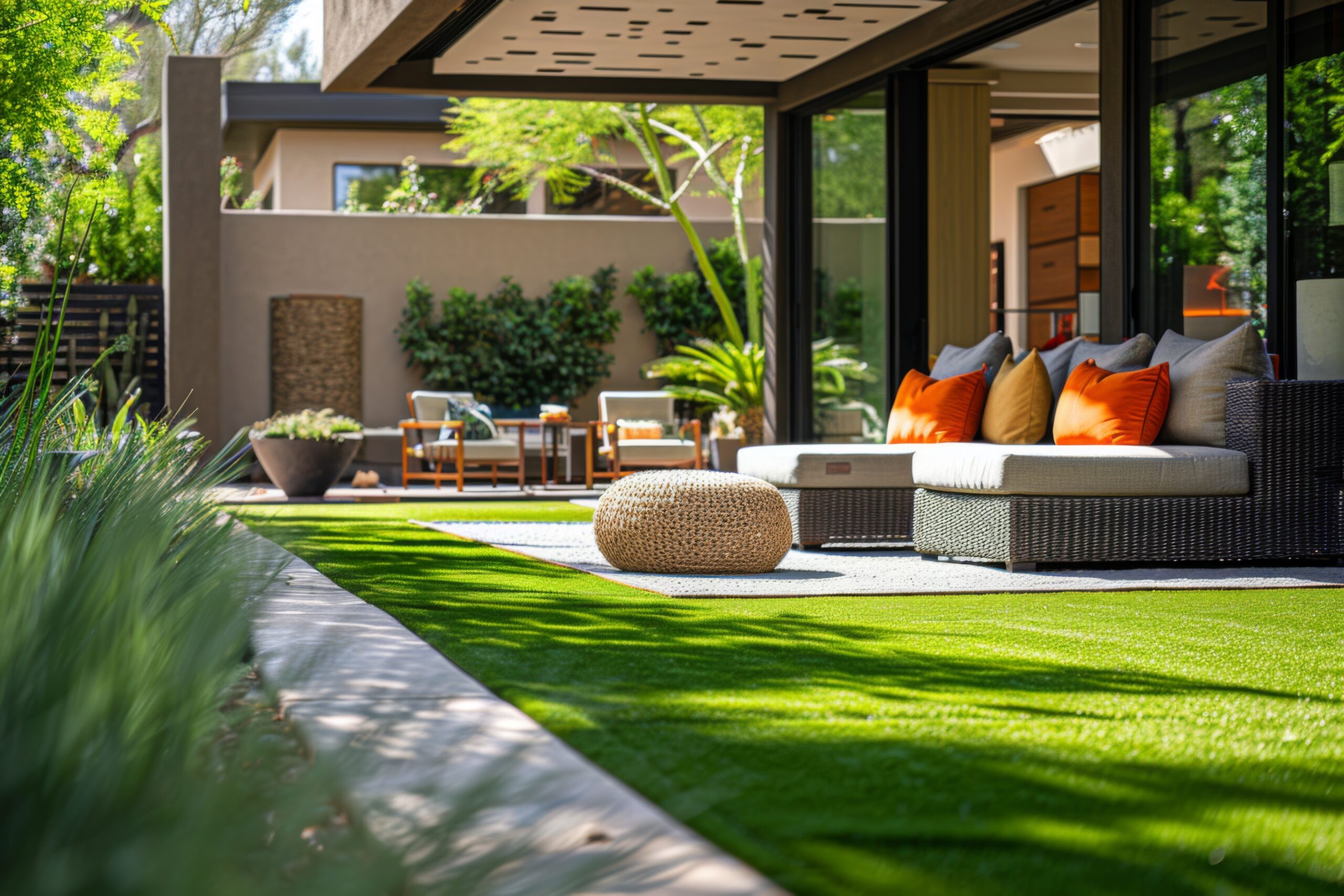
Arizona homeowners know that spring is prime outdoor living season. Before temperatures climb, it’s the perfect time to clean, repair, and upgrade outdoor spaces.

Start with your patio or backyard:

  • Power wash concrete, pavers, and outdoor surfaces
  • Clean outdoor furniture cushions and frames
  • Replace worn or faded pillows
  • Check umbrellas and shade structures
  • Test outdoor lighting

Small upgrades go a long way. New seating cushions, a refreshed rug, or updated string lighting can completely transform a space without major investment.

If you entertain, consider:

  • Creating flexible seating arrangements
  • Adding a serving table or bar area
  • Making sure pathways are well-lit

Outdoor spaces become an extension of your home in Arizona. Prepping early ensures you’ll use them more often and enjoy them longer.


Check Your Irrigation System Before It Matters

Few things cause frustration like a malfunctioning irrigation system in the middle of summer. Early spring is the perfect time to test and adjust everything while repairs are easier and more comfortable.

Run your system zone by zone and check:

  • Broken or clogged sprinkler heads
  • Uneven spray patterns
  • Overspray hitting walls or windows
  • Leaks or pooling water

Adjust timers gradually as temperatures increase. Overwatering early wastes resources and can damage plants. Underwatering later creates stress and dead landscaping. A balanced approach keeps everything healthy and efficient.


Prepare Your HVAC System for the Heat Ahead

Your HVAC system is one of the most important parts of your home during Arizona summers. Spring is the time to make sure it’s ready.

Simple steps include:

  • Replacing air filters
  • Clearing debris around outdoor units
  • Checking vents and registers inside
  • Scheduling a professional inspection if it hasn’t been done recently

Clean filters improve airflow and indoor air quality. They also reduce strain on your system, helping it operate more efficiently during extreme heat.


Transition Your Home from “Cozy” to “Light and Airy”

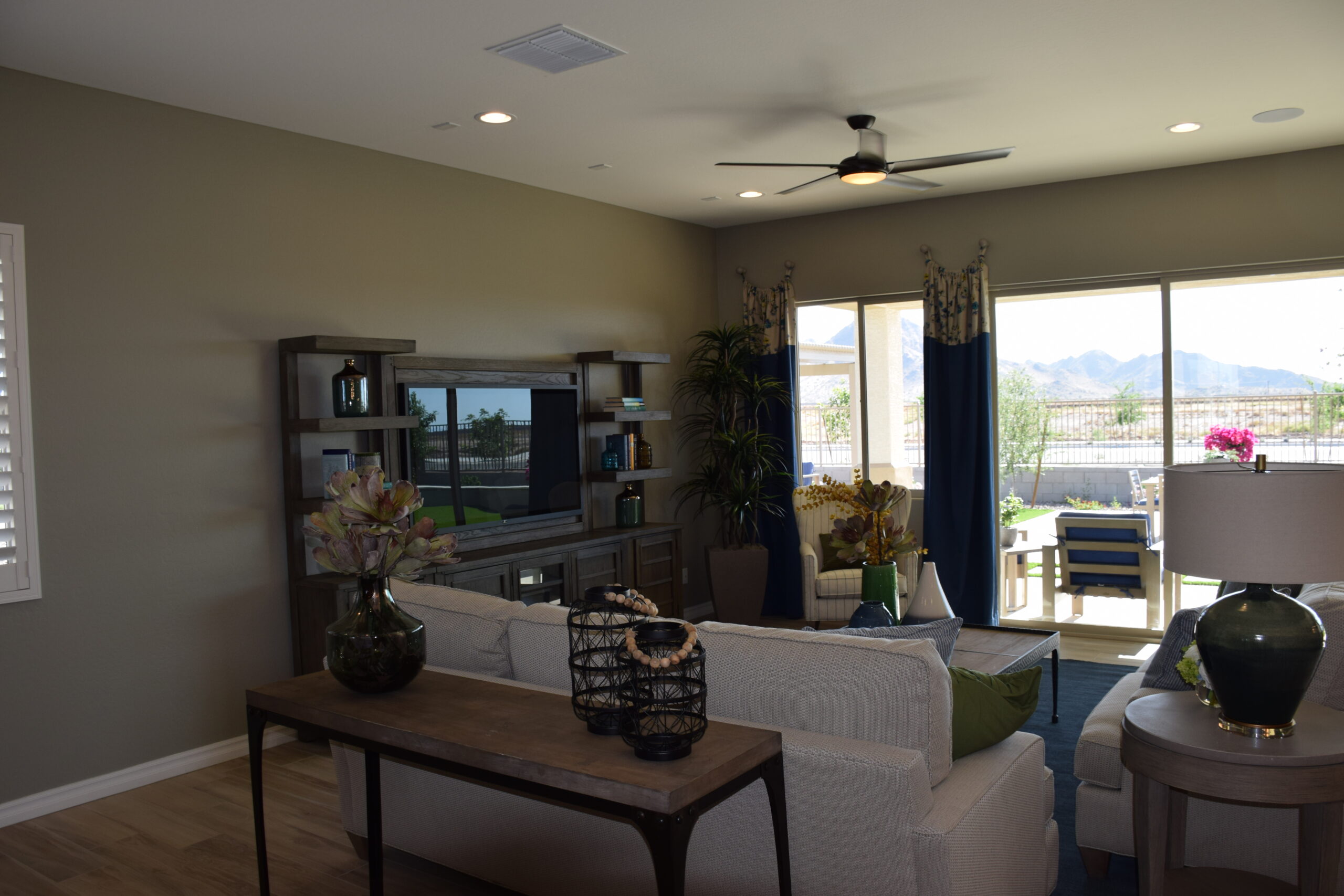
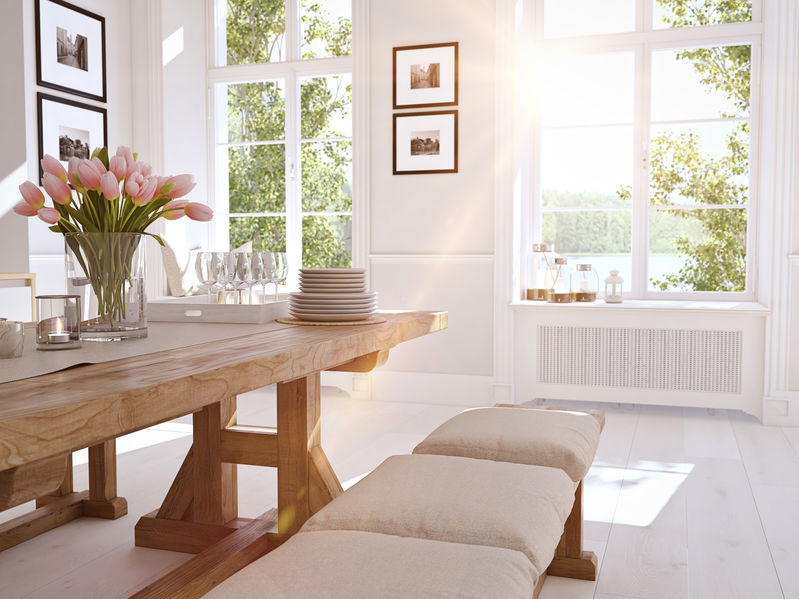
Winter interiors tend to feel heavier: thicker blankets, darker colors, layered décor. As spring approaches, swapping in lighter textures and brighter tones helps your home feel cooler and more open.

Consider:

  • Replacing heavy throws with lighter fabrics
  • Swapping darker pillows for lighter neutrals or soft colors
  • Letting in more natural light
  • Refreshing entryways with greenery or lighter décor

These changes don’t just look better. They psychologically prepare your home for warmer months and help rooms feel less closed in.


Tackle Storage Before Spring Gets Busy

Spring brings activity. Kids’ schedules change. Sports start. Travel increases. A little organization now prevents chaos later.

Focus on:

  • Closets
  • Garages
  • Laundry rooms
  • Pantries
  • Entryways

Sort items into:

  • Keep
  • Donate
  • Discard

Create zones for:

  • Seasonal gear
  • Outdoor equipment
  • Cleaning supplies
  • Everyday essentials

A well-organized home runs more smoothly, especially during busy months.


Refresh Your Floors and High-Traffic Areas

Arizona homes see plenty of dust and foot traffic, especially in spring. Early season cleaning extends the life of your flooring and makes your home feel new again.

Deep cleaning ideas:

  • Professional carpet cleaning
  • Steam cleaning tile and grout
  • Polishing hard surfaces
  • Replacing worn entry mats

These small resets improve appearance and indoor air quality while preparing your home for heavier summer use.


Focus on Indoor Air Quality Before Allergy Season Peaks

Spring in Arizona brings dust and allergens. Improving indoor air quality now helps your home stay healthier.

Steps to take:

  • Change HVAC filters regularly
  • Vacuum with HEPA filtration
  • Clean ceiling fans and vents
  • Wash window treatments
  • Consider adding air-purifying plants

Cleaner air means fewer irritants, better sleep, and improved comfort.


Make Smart Shade Improvements

Shade is everything in Arizona. Spring is the best time to add or improve shade features before the sun becomes intense.

Options include:

  • Outdoor shades
  • Pergolas
  • Retractable awnings
  • Shade sails
  • Interior window coverings

Even small additions can significantly reduce heat gain and increase comfort.


Prepare for Water Usage Season

Warmer months mean more water use. Prepping now helps manage costs and prevent issues.

Check:

  • Faucets and hose connections
  • Pool equipment
  • Drip irrigation lines
  • Outdoor spigots

Fixing leaks early saves money and water.


Light Maintenance Now Prevents Big Repairs Later

Spring prep is about prevention.

Look for:

  • Cracks in exterior walls
  • Worn caulking around windows
  • Loose fixtures
  • Fence repairs
  • Roof debris

These small fixes prevent larger problems once heat intensifies.


Refresh Your Home’s Entry Experience

Your front entry sets the tone for your entire home. Spring is a great time to lighten and refresh it.

Consider:

  • A new welcome mat
  • Updated plants
  • A simple door hardware update
  • Fresh lighting

Small changes create a noticeable impact.


Embrace Arizona’s Early Spring Energy

Spring in Arizona isn’t loud or obvious. It arrives quietly, giving homeowners a window of opportunity that most other regions don’t have. Taking advantage of this season allows you to prepare intentionally rather than reactively.

Instead of scrambling in summer heat:

  • Your systems are ready
  • Your outdoor spaces are inviting
  • Your home feels lighter and more organized
  • Your energy bills stay more manageable

That’s the power of early preparation.


Final Thought

Spring starts early in Arizona, and that’s a gift. It gives you time. Time to plan. Time to refresh. Time to prepare before the pace of the year accelerates and temperatures climb.

By taking small, smart steps now, you create a home that feels more comfortable, functional, and enjoyable all year long. Preparation doesn’t have to be overwhelming. It simply requires intention, awareness, and the willingness to begin before the season demands it.

Your home works hard for you. Early spring is the perfect time to return the favor.

Home Is an Investment: Simple Ways to Protect and Preserve Its Value Over Time

Your home is more than where life happens. It is one of the largest investments most people will ever make. While market conditions and location influence value, day-to-day care and thoughtful stewardship play an equally important role. A well-maintained home holds its value longer, performs better, and provides a higher level of comfort and pride of ownership.

Protecting your investment does not require expensive renovations or constant upgrades. In fact, the most effective strategies are often simple, consistent habits that prevent small issues from becoming costly repairs. Over time, these choices add up to a home that remains efficient, attractive, and structurally sound.

Here are practical ways to preserve and protect your home’s value for years to come.


1. Start with Preventative Maintenance

Preventative maintenance is the foundation of home preservation. Just like routine care keeps a vehicle running smoothly, regular home upkeep prevents deterioration and costly surprises.

Key areas to check regularly include:

  • Roof and gutters: Inspect for debris buildup, loose shingles, or signs of wear. Clean gutters to ensure proper drainage.
  • Exterior walls and stucco: Look for cracks or water intrusion points and address them early.
  • Plumbing: Watch for slow leaks under sinks, around toilets, and near water heaters.
  • Electrical systems: Replace outdated outlets and address flickering lights or frequent breaker trips.
  • HVAC systems: Change filters monthly and schedule annual professional servicing.

Small efforts here protect the home’s structure and mechanical systems, preserving both comfort and resale value.


2. Protect Against Arizona’s Climate

Living in a desert environment presents unique challenges that make proactive care even more important. Sun exposure, heat, dust, and monsoon storms all impact a home over time.

Ways to protect your home in hot, dry climates include:

  • Window care: Use UV-protective window coverings to reduce heat and prevent fading of floors and furniture.
  • Exterior sealants: Keep paint, stucco, and caulking in good condition to prevent cracking from sun exposure.
  • Shade structures: Pergolas, awnings, and trees can lower surface temperatures and reduce heat stress on exterior materials.
  • Dust management: Regular cleaning protects air quality and keeps HVAC systems running efficiently.
  • Storm preparation: Secure outdoor furniture and check drainage areas before heavy rains.

Climate-aware maintenance ensures your home ages gracefully, not prematurely.


3. Preserve Structural Integrity

The structural elements of your home are its backbone. Protecting them preserves both safety and long-term value.

Focus on:

  • Foundation health: Watch for new cracks in walls or floors, doors that suddenly stick, or uneven surfaces.
  • Drainage: Ensure water flows away from the home to prevent soil shifting and foundation stress.
  • Roof condition: A healthy roof prevents water damage, mold growth, and insulation issues.

Structural soundness is one of the first things inspectors and buyers evaluate. Protecting it protects your investment.


4. Keep Systems Running Efficiently

Mechanical systems are costly to replace, but affordable to maintain. Regular servicing extends lifespan and reduces energy costs.

Maintain:

  • Heating and cooling systems with annual tune-ups.
  • Water heaters by flushing sediment buildup annually.
  • Appliances through cleaning coils, filters, and seals.
  • Smart thermostats to optimize temperature control.

Efficiency protects value by lowering operating costs and improving overall performance.


5. Maintain Curb Appeal

First impressions matter. Curb appeal plays a major role in perceived value and pride of ownership.

Simple improvements include:

  • Keeping landscaping trimmed and healthy
  • Touching up exterior paint
  • Power washing driveways and walkways
  • Replacing worn house numbers and lighting
  • Keeping entryways clean and welcoming

A home that looks cared for signals quality and attention inside as well.


6. Protect Interior Surfaces

Interior finishes wear over time, but thoughtful care preserves both appearance and function.

Key areas to protect:

  • Flooring: Use rugs in high-traffic areas, clean spills promptly, and follow product care guidelines.
  • Cabinetry: Clean gently, avoid harsh chemicals, and address loose hardware.
  • Countertops: Use cutting boards, trivets, and seal natural stone when recommended.
  • Walls and trim: Touch up scuffs and dents before they accumulate.

Preserving finishes keeps your home feeling fresh without constant updates.


7. Manage Moisture Carefully

Even in dry climates, moisture remains one of the greatest threats to home integrity.

Watch for:

  • Leaks around sinks, tubs, and toilets
  • Condensation near windows
  • Poor bathroom ventilation
  • Landscape irrigation spraying too close to the home

Catching moisture issues early prevents mold growth, wood rot, and structural damage.


8. Invest in Smart, Timeless Updates

When upgrades are needed, choose options that enhance durability and broad appeal.

Strong investment updates include:

  • Energy-efficient lighting
  • Updated hardware and fixtures
  • Neutral, timeless paint colors
  • Modern thermostats and security systems
  • Water-saving plumbing fixtures

These improvements add value without over-customizing.


9. Document Your Home’s Care

Keeping records matters more than many homeowners realize. Maintenance logs, receipts, warranties, and service history show responsible ownership.

This documentation:

  • Builds buyer confidence
  • Supports warranty claims
  • Demonstrates proactive care
  • Helps track aging systems

Think of it as a resume for your home.


10. Protect Outdoor Spaces Too

Your outdoor areas are part of your investment.

Protect:

  • Patios and hardscapes by cleaning and sealing as needed
  • Irrigation systems by checking for leaks and clogged emitters
  • Outdoor structures with routine inspections

Functional, well-maintained outdoor spaces add lifestyle and financial value.


11. Stay Ahead of Small Repairs

Deferred maintenance is the fastest way to erode home value.

Small problems grow when ignored:

  • A dripping faucet becomes cabinet damage
  • A cracked tile leads to moisture intrusion
  • Loose caulking allows water penetration

Quick fixes save money and preserve quality.


12. Think Like a Long-Term Owner

Even if you plan to stay for years, caring for your home as though it will one day be sold keeps standards high.

Ask yourself:

  • Does this choice protect or weaken long-term value?
  • Is this solution durable or temporary?
  • Will future owners appreciate this improvement?

Homes cared for with long-term thinking consistently outperform those maintained only for convenience.


13. Balance Personalization with Preservation

Personal style matters. Your home should reflect who you are. Just keep core elements neutral and timeless, allowing design preferences to evolve without harming resale value.

Use décor and furnishings to express personality while protecting permanent features.


14. Create a Seasonal Maintenance Rhythm

Establishing seasonal routines makes upkeep easier:

Spring

  • HVAC service
  • Window cleaning
  • Exterior inspections

Summer

  • Monitor cooling efficiency
  • Inspect irrigation

Fall

  • Gutter cleaning
  • Seal cracks and gaps

Winter

  • Check insulation
  • Inspect weather stripping

Consistency is more powerful than perfection.


15. Pride of Ownership Is the Real Investment

Homes that hold value best share one thing in common: attentive ownership. They are clean, cared for, thoughtfully updated, and protected from neglect.

Protecting your home’s value is not about perfection. It is about stewardship. It is about recognizing that your home represents both a financial asset and a deeply personal space.

When you care for it with intention, your home rewards you with comfort, security, and confidence that your investment is protected for the long run.


A well-preserved home stands as proof that pride of ownership matters. Over time, simple choices, consistent care, and thoughtful improvements ensure your home remains strong, beautiful, and valuable—today and for years to come.

Backyard Bliss: Low-Maintenance Landscaping Ideas for Arizona Homes

Creating a beautiful backyard in Arizona doesn’t have to mean sacrificing your weekends to watering, trimming, and pruning. In fact, with the right landscaping strategy, you can enjoy a visually stunning outdoor space that stands up to the desert climate—and does so with minimal upkeep. Whether you’re starting from scratch or looking to refresh your existing yard, smart low-maintenance landscaping can help you enhance curb appeal, conserve water, and spend more time enjoying your home rather than maintaining it.

At Fulton Homes, we understand that Arizona homeowners want outdoor spaces that are functional, drought-tolerant, and beautiful year-round. In this guide, we’ll explore landscaping ideas tailored to Arizona’s dry conditions and provide inspiration for designing a backyard that thrives with less effort.


Why Low-Maintenance Landscaping Makes Sense in Arizona

Arizona’s climate presents both challenges and opportunities for homeowners. With high temperatures, intense sun exposure, and minimal rainfall, maintaining a lush green lawn year-round simply isn’t practical—or environmentally friendly.

Low-maintenance landscaping focuses on selecting materials and plants that:

  • Conserve water
  • Tolerate heat and drought
  • Reduce the need for mowing, pruning, or fertilizing
  • Contribute to sustainability and energy efficiency

With proper planning, your outdoor space can be just as vibrant and functional as a traditional lawn, without the resource demands.


Key Principles of Low-Maintenance Desert Landscaping

Before jumping into plant choices and design ideas, it helps to understand a few core principles that define successful low-maintenance landscaping in a desert climate:

1. Xeriscaping

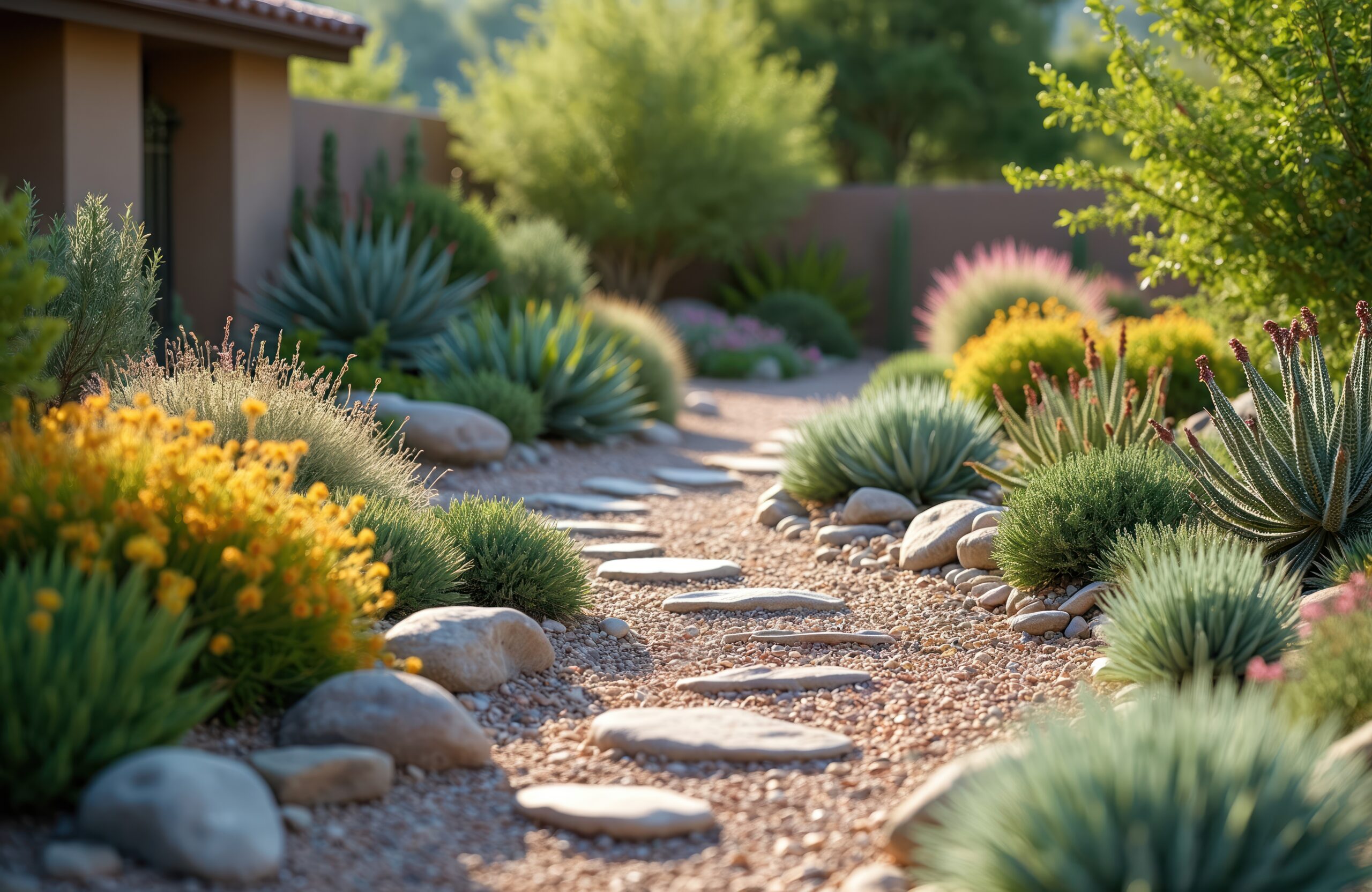
Xeriscaping is a landscaping philosophy that focuses on minimizing water use. It involves grouping plants with similar watering needs, using mulch to retain soil moisture, and eliminating unnecessary turf.

2. Hardscaping

Hardscaping elements—such as patios, pathways, boulders, or decorative gravel—provide structure and beauty without requiring water or seasonal maintenance. These features form the backbone of a desert-friendly yard.

3. Native and Drought-Tolerant Plants

Choosing plants that are native to Arizona or adapted to arid conditions ensures that your landscape thrives with little intervention. These plants are built to withstand heat and long dry spells.

4. Efficient Irrigation

If irrigation is needed, opt for drip systems over sprinklers. Drip irrigation delivers water directly to a plant’s root zone, minimizing waste from evaporation or runoff.


Top Drought-Tolerant Plants for Arizona Backyards

When designing your landscape, focus on a mix of textures, heights, and colors to create visual interest. Here are some low-water-use plants that perform beautifully in the Arizona climate:

Succulents and Cacti

These iconic desert dwellers come in an array of shapes, sizes, and colors. They require very little water and provide architectural interest.

  • Agave – Striking rosette shapes with dramatic leaf tips.
  • Aloe Vera – A practical plant with healing properties and seasonal blooms.
  • Barrel Cactus – Round and compact, great as focal points.
  • Prickly Pear – Distinct paddle-like pads with colorful flowers and edible fruit.

Desert Perennials

Perennials offer seasonal blooms and a pop of color while maintaining drought resistance.

  • Red Yucca – Slender leaves and bright coral flower spikes.
  • Penstemon – Tubular flowers in red, pink, or purple that attract hummingbirds.
  • Desert Marigold – Bright yellow flowers that bloom much of the year.
  • Salvia – Hardy, fragrant, and colorful with minimal watering needs.

Desert Trees and Shrubs

Trees and shrubs provide shade, wind protection, and visual structure.

  • Palo Verde – Arizona’s state tree, known for its green bark and yellow spring flowers.
  • Texas Ranger (Leucophyllum) – A flowering shrub that thrives in heat and poor soil.
  • Ironwood – Dense foliage with lavender flowers; great for larger backyards.
  • Hopbush – A full, low-water shrub with red or green foliage, good for privacy.

Creative Gravel and Groundcover Alternatives

Instead of traditional grass, consider these visually interesting and low-maintenance alternatives for groundcover:

1. Decomposed Granite

Decomposed granite (DG) is a compacted gravel material that offers a natural, refined look. It’s available in a variety of earthy tones and works well for pathways, patios, and filler between plants.

2. River Rock and Pea Gravel

Use small, rounded stones to add contrast and texture to beds and borders. These rocks help reduce erosion and keep soil temperatures stable.

3. Artificial Turf

If you love the look of grass but don’t want the upkeep, artificial turf offers a green, manicured appearance without the water usage or mowing. Newer turf products are soft, pet-friendly, and UV-resistant.

4. Living Groundcovers

Some hardy plant species act as living carpets that spread and fill in bare spots:

  • Lantana – Colorful, flowering groundcover that thrives in full sun.
  • Trailing Rosemary – Evergreen herb with delicate blue flowers and fragrant foliage.
  • Dalea – Native option with purple or yellow flowers and a low, bushy profile.

Incorporating Hardscape for Function and Style

Hardscaping is essential to low-maintenance landscaping. It adds dimension, contrast, and utility—without the need for watering or trimming. Consider incorporating:

Paver Patios

Create outdoor living spaces that are perfect for entertaining. Use heat-reflective pavers in soft tones to reduce surface temperatures underfoot.

Walkways and Stepping Stones

Stone pathways define garden areas and make navigation easier while reducing soil compaction and erosion.

Decorative Boulders

Use large stones as natural sculptures to create focal points or visual anchors in the yard.

Retaining Walls or Raised Beds

Add dimension and create contained planting zones, especially useful in sloped yards.


Design Tips for a Desert-Ready, Low-Maintenance Backyard

Even with practical materials and plant selections, thoughtful design ties everything together. Here are some tips for achieving a cohesive, functional outdoor space:

1. Use Plant Groupings

Cluster plants with similar water and sun needs together to make irrigation more efficient and reduce maintenance.

2. Layer Textures and Heights

Mix tall plants like desert trees with medium-height shrubs and low-growing groundcovers to create depth and interest.

3. Add Shade Strategically

Use shade sails, pergolas, or leafy trees to create cool, usable zones for relaxing during the day.

4. Include Functional Features

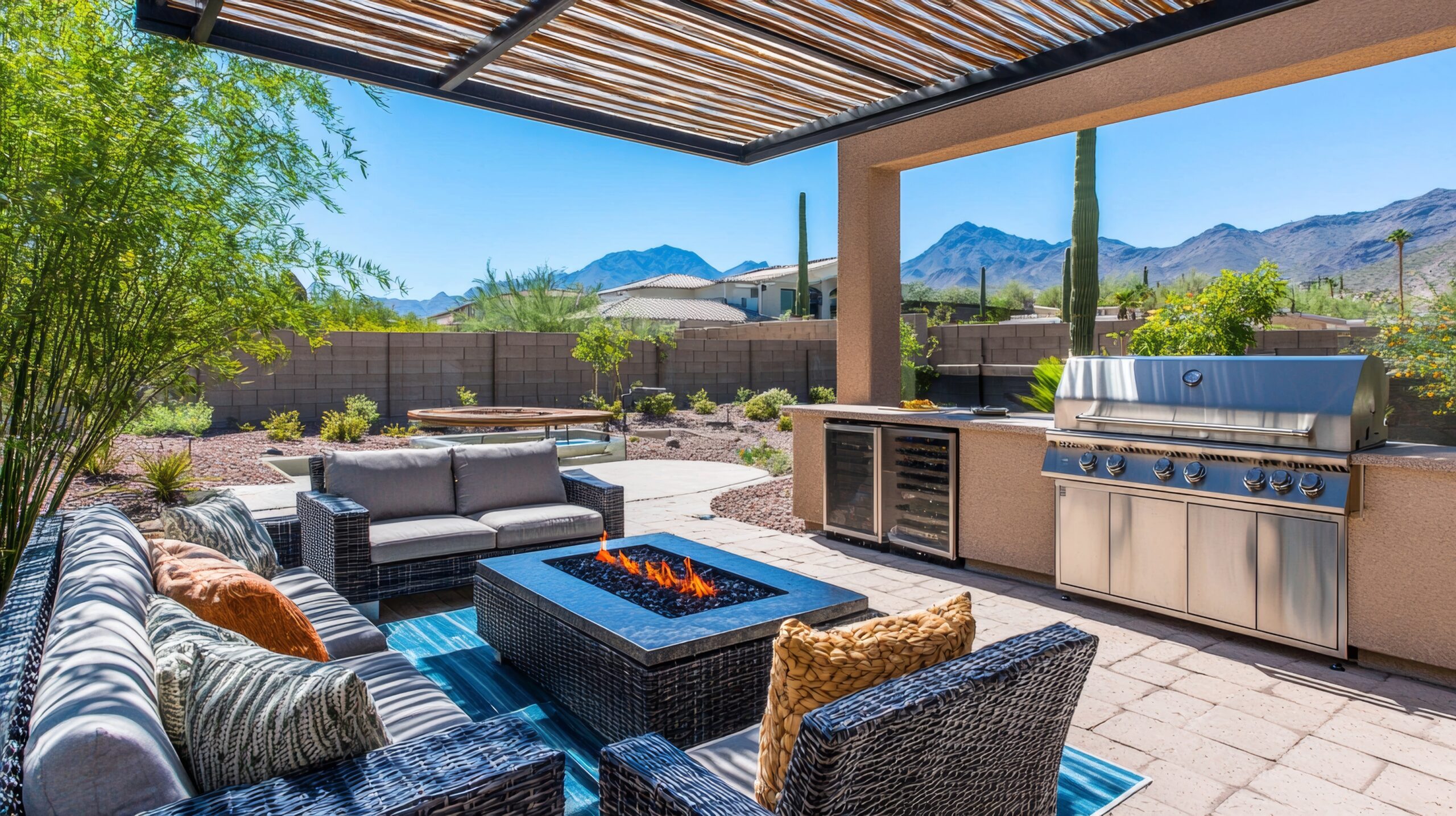
Outdoor kitchens, fire pits, or seating areas increase your yard’s usability and help you enjoy the space year-round.

5. Keep a Neutral Base

Stick with neutral-toned gravel or stone for the base palette, then use plants and pots to add color and vibrancy that can be easily updated.


Water Conservation Without Sacrificing Beauty

One of the best reasons to invest in low-maintenance landscaping in Arizona is the long-term water savings. With water resources becoming increasingly precious, homeowners are turning to drought-tolerant designs that benefit both the environment and their monthly utility bills.

Many cities in Arizona, including the Phoenix metro area, offer rebates or incentives for homeowners who replace traditional turf with xeriscaping or water-efficient irrigation systems. Be sure to check your local municipality’s conservation programs for opportunities to save.


Bringing Your Desert Oasis to Life

With a bit of planning, a low-maintenance backyard in Arizona can be every bit as beautiful as a traditional lawn-based landscape—and far more sustainable. Whether you’re dreaming of a modern outdoor living space, a shaded courtyard, or a flowering desert garden, the right combination of drought-tolerant plants, creative hardscape, and smart design can turn your outdoor space into a true desert oasis.

At Fulton Homes, we’re committed to helping Arizona families love every inch of their home—including the backyard. Whether you’re personalizing your new construction home or updating your current landscape, our homes are designed with outdoor living in mind.


Ready to Transform Your Backyard?

Start with the essentials: choose sustainable, low-maintenance materials and plants that thrive in Arizona’s climate. The result is a yard that looks great, saves water, and gives you more time to relax and enjoy everything that homeownership should be.

Creating the Perfect Outdoor Living Space for Arizona Entertaining

Arizona’s picturesque desert landscape and year-round sunshine make it the ideal setting for outdoor living and entertaining. Whether you’re hosting a sunset soiree, a laid-back barbecue, or a cozy evening under the stars, crafting the perfect outdoor space can elevate your lifestyle and provide a seamless extension of your home. Here’s how to design an inviting, functional, and beautiful outdoor living area tailored for Arizona’s unique climate and culture.


1. Understand Your Space and Purpose

Before diving into design elements, consider how you plan to use your outdoor area. Are you looking to host large gatherings, intimate dinners, or family relaxation? Do you need space for children or pets? Understanding the purpose will help you make intentional decisions, from choosing the right furniture to incorporating functional zones.

Tip: Sketch out your space, including measurements and natural features like trees or slopes. This will help you visualize the layout and maximize usability.


2. Create Functional Zones

Effective outdoor living spaces are thoughtfully divided into zones. Consider these key areas:

  • Dining Area: Ideal for hosting meals, this zone should include a dining table, chairs, and easy access to the kitchen or grilling station.
  • Lounge Area: Designed for relaxation, this space can include comfortable seating, coffee tables, and shade options.
  • Cooking Station: From built-in grills to full outdoor kitchens, having a dedicated cooking area adds functionality and enhances the entertaining experience.
  • Fire Pit or Fireplace: Perfect for cool Arizona evenings, fire features create a cozy ambiance for conversation and relaxation.
  • Activity Space: If you have children or enjoy outdoor games, design a section for play or recreation, ensuring it’s safely away from the dining and lounge areas.

Tip: Use outdoor rugs, planters, or hardscape elements to visually separate these zones without creating physical barriers.


3. Embrace Arizona’s Climate with Smart Shading Solutions

Arizona’s sun can be intense, making shade a crucial element of outdoor design. Consider incorporating:

  • Pergolas or Gazebos: These structures provide architectural interest while offering adjustable shade.
  • Retractable Awnings: Ideal for flexibility, these allow you to control the amount of sunlight or shade depending on the time of day.
  • Shade Sails: A modern, stylish option, these fabric installations can be customized in shape and color to match your design aesthetic.
  • Natural Shade: Leverage Arizona’s native plants like Palo Verde trees or mesquite to create natural shaded areas while enhancing the desert landscape.

Tip: Position seating areas to take advantage of natural shade during the hottest parts of the day.


4. Choose Durable and Stylish Outdoor Furniture

Outdoor furniture must withstand Arizona’s high temperatures, intense UV rays, and monsoon winds. Opt for materials that are both durable and stylish, such as:

  • Wicker and Rattan: Look for weather-resistant synthetic versions that maintain the classic, elegant look without fading or cracking.
  • Metal Furniture: Aluminum or powder-coated steel are great options as they resist rust and can handle extreme temperatures.
  • Sunbrella Fabric Cushions: These are UV-resistant, water-repellent, and easy to clean, making them perfect for Arizona’s outdoor environment.

Tip: Opt for lighter colors to reflect heat and keep seating surfaces cooler.


5. Maximize Comfort with Climate Control Features

Keep your outdoor space comfortable year-round with strategic climate control features:

  • Misting Systems: Essential for Arizona summers, misting systems can reduce temperatures by up to 20 degrees.
  • Ceiling Fans: Install outdoor-rated fans in covered areas for constant air circulation and cooling.
  • Outdoor Heaters: Propane or electric heaters extend usability into cooler months, allowing you to entertain comfortably year-round.

Tip: Place misting systems and fans in dining and lounge areas for maximum impact.


6. Incorporate Beautiful and Low-Maintenance Landscaping

Arizona’s desert climate calls for landscaping that’s both beautiful and drought-resistant. Consider these elements:

  • Xeriscaping: Utilize rocks, gravel, and native plants like succulents, agave, and desert wildflowers for a stunning, water-efficient landscape.
  • Artificial Turf: This provides a lush green look without the maintenance and water requirements of natural grass.
  • Container Gardens: Add pops of color with container gardens featuring heat-tolerant plants like bougainvillea or lantana.

Tip: Integrate raised planters or vertical gardens to add dimension and enhance privacy.


7. Set the Mood with Outdoor Lighting

Proper lighting enhances safety while setting the perfect mood for evening entertaining. Consider a layered approach:

  • Pathway Lights: Illuminate walkways for safe navigation.
  • String Lights: Create a whimsical, festive atmosphere by draping string lights over seating areas or pergolas.
  • Uplighting and Downlighting: Use these to highlight architectural features or landscaping elements for dramatic effect.
  • Lanterns and Candles: Add a cozy, intimate glow with strategically placed lanterns or flameless candles.

Tip: Opt for solar-powered or LED lights for energy efficiency.


8. Include Entertainment Features

Make your outdoor space the ultimate entertainment hub with features such as:

  • Outdoor Sound Systems: Integrate weather-resistant speakers for high-quality sound that blends seamlessly into the landscape.
  • Outdoor TV or Projector: Perfect for movie nights or watching the big game under the stars.
  • Games and Recreation: Cornhole, bocce ball, or even a putting green can add fun and interactive elements for guests.

Tip: Ensure electronic features are protected from the elements with weatherproof enclosures.


9. Personalize with Decorative Accents

Complete the look by adding your personal style with decorative accents:

  • Outdoor Rugs: Define seating areas and add color and texture.
  • Throw Pillows and Blankets: Choose patterns and fabrics that complement your design while providing comfort.
  • Wall Art and Sculptures: Weather-resistant artwork or metal sculptures can enhance the aesthetic appeal.
  • Tabletop Décor: Use lanterns, vases, or seasonal centerpieces to elevate your dining area.

Tip: Choose UV-resistant materials to maintain vibrant colors year-round.


10. Design for Easy Maintenance

An outdoor space should be a retreat, not a chore. Ensure easy maintenance with these tips:

  • Use Composite Decking: It resists fading, warping, and staining, reducing the need for upkeep.
  • Install Drip Irrigation: Efficiently water plants while minimizing waste and maintenance.
  • Select Stain-Resistant Fabrics: This makes cleaning spills and dirt a breeze.

Tip: Arrange furniture and planters for easy access during cleaning and maintenance routines.


Creating the perfect outdoor living space in Arizona is all about blending functionality, comfort, and style while respecting the desert climate. By thoughtfully designing zones, selecting durable and stylish furnishings, integrating climate control, and using beautiful, low-maintenance landscaping, you can craft a space that’s perfect for entertaining year-round.

Whether you’re hosting a lively party or enjoying a quiet evening with loved ones, an intentional outdoor living area enhances your lifestyle and maximizes Arizona’s incredible outdoor potential.

Ready to transform your backyard into the ultimate entertainment space? Get started today and make the most of Arizona’s stunning weather and breathtaking landscapes.

Design Trends for 2025: Fresh Ideas for Your Arizona Home

As 2025 begins, homeowners in Arizona are reimagining their spaces to reflect modern trends that blend functionality, sustainability, and aesthetics. Living in a desert climate comes with unique design opportunities and challenges, and this year’s trends are perfectly suited for Arizona’s vibrant, sun-drenched environment. From embracing natural elements to integrating cutting-edge technology, these ideas will inspire you to create a stylish, comfortable, and functional home.

Let’s explore the top design trends that are making waves in the Arizona market this year.


1. Earthy, Desert-Inspired Color Palettes

Arizona’s breathtaking desert landscape serves as the perfect inspiration for 2025’s trending color palettes. Homeowners are moving toward earthy tones that echo the natural environment, such as terracotta, sandstone, sage green, and soft clay. These hues create a calming, grounded atmosphere while harmonizing with the region’s unique beauty.

How to Incorporate These Colors:

  • Use warm neutrals like beige or taupe for walls, creating a versatile backdrop.
  • Introduce accent colors like sage green through furniture, throw pillows, or rugs.
  • Experiment with two-tone kitchens by pairing terracotta lower cabinets with off-white upper cabinets.

Pro Tip: Combine earthy tones with natural materials like wood, rattan, and leather to create a cohesive, desert-inspired design.


2. Sustainable Materials for Eco-Friendly Living

Sustainability is no longer a trend—it’s a way of life. In 2025, Arizona homeowners are prioritizing eco-friendly materials that are both durable and beautiful. The desert climate demands materials that can withstand extreme temperatures while minimizing environmental impact.

Popular Sustainable Materials:

  • Reclaimed Wood: Perfect for adding warmth to rooms as accents or custom furniture.
  • Clay and Terracotta: Tiles, pottery, and decorative elements.
  • Metal Accents: Copper and bronze decorative details, nodding to Arizona’s mining history.

Why It Matters: Sustainable choices reduce your home’s carbon footprint and often lead to long-term cost savings through energy efficiency and durability.


3. Luxurious Outdoor Living Spaces

Arizona’s weather invites outdoor living, and in 2025, homeowners are maximizing their exterior spaces with luxury and functionality. Outdoor areas are no longer just patios; they’ve evolved into fully equipped extensions of the home, complete with kitchens, seating areas, and even entertainment zones.

Design Tips for Outdoor Living:

  • Shade Solutions: Pergolas, retractable awnings, or sail shades provide relief from the sun while maintaining an open feel.
  • Outdoor Kitchens: Include a grill, sink, and refrigerator to create the ultimate entertaining space.
  • Desert Landscaping: Use xeriscaping techniques with drought-tolerant plants like agave, succulents, and desert marigolds.

Pro Tip: Install string lights or in-ground lighting to create ambiance and extend the use of your outdoor space into the evening.


4. Energy Efficiency as a Design Priority

Energy-efficient homes are a necessity in Arizona, where cooling costs can soar. In 2025, homeowners are turning to smart design features and innovative technology to reduce energy consumption while keeping their homes comfortable.

Must-Have Energy-Efficient Features:

  • Low-E Windows: Reflect heat while letting in natural light.
  • Cool Roofs: Roofing materials designed to reflect sunlight and reduce indoor temperatures.
  • Smart Thermostats: Automatically adjust your HVAC system for optimal efficiency.
  • Solar Panels: Harness Arizona’s abundant sunshine to power your home sustainably.

Pro Tip: Combine energy-efficient features with passive cooling techniques, such as planting shade trees or installing window overhangs, to further reduce energy use.


5. Open-Concept Living with Multifunctional Spaces

The open-concept trend continues to thrive in 2025, with homeowners seeking flexible layouts that cater to modern lifestyles. In Arizona, open spaces provide a sense of airiness and facilitate indoor-outdoor living, which is ideal for the region’s climate.

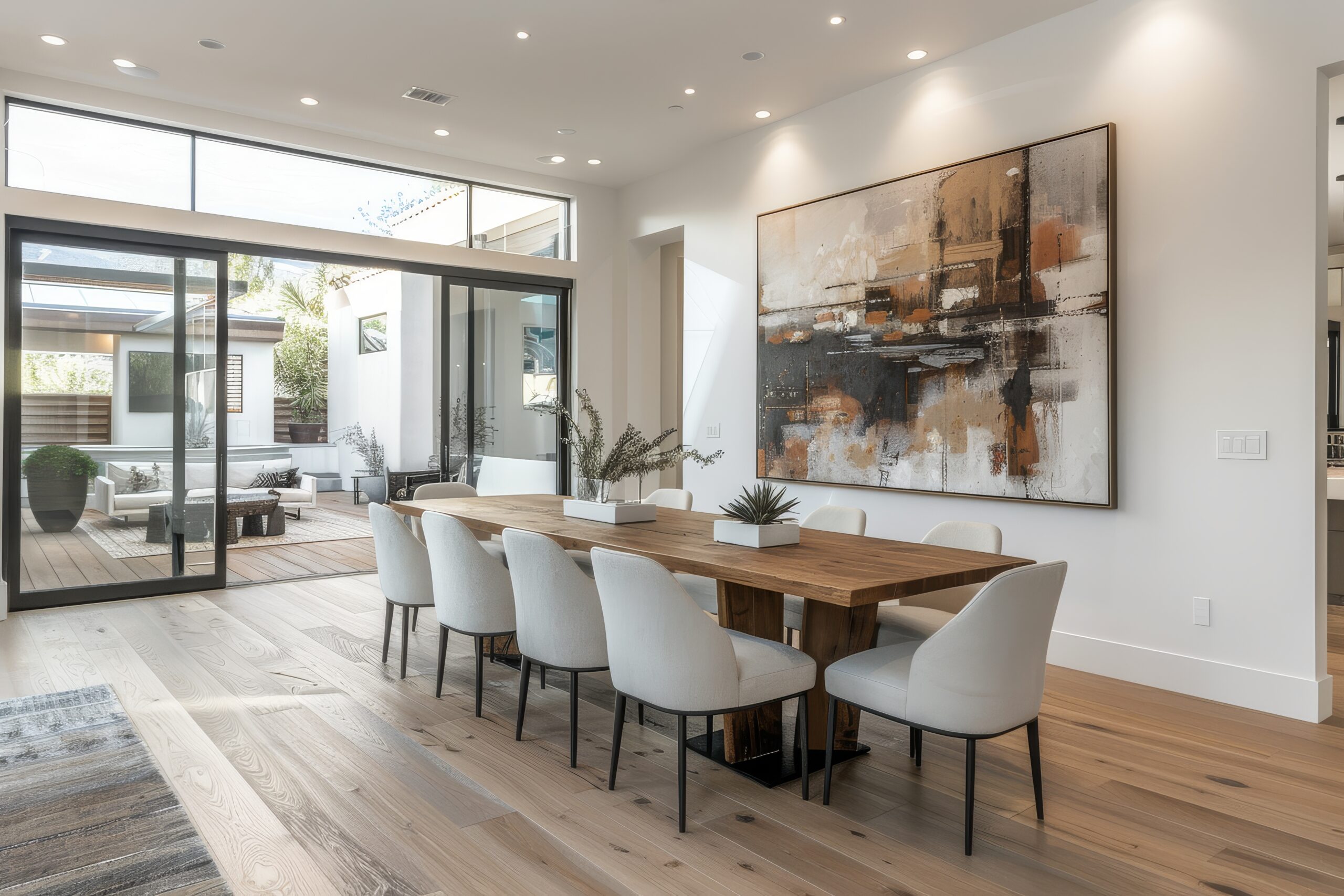
Open-concept living in Arizona is more than a design choice—it’s a lifestyle. By breaking down traditional barriers, homeowners can enjoy spaces that flow naturally and adapt to various needs. In the desert climate, open layouts blur the line between indoor and outdoor living, creating harmonious transitions perfect for entertaining or relaxation. Large sliding glass doors and windows not only maximize natural light but also provide easy access to shaded patios and courtyards, encouraging year-round use of outdoor spaces. To enhance functionality, consider zoning areas within open layouts using rugs, furniture arrangements, or partial walls. This approach maintains the open feel while subtly defining areas for work, dining, and play.

For busy families, combining elements like a kitchen island with built-in charging stations or a media nook transforms a space into a true command center. Similarly, small touches such as collapsible partitions or plant walls can provide privacy when needed without sacrificing the expansive atmosphere. To tie the look together, use cohesive materials like stone or wood for a seamless, grounded aesthetic. In Arizona, where the desert landscape inspires creativity, open-concept designs reflect both the beauty of the environment and the flexibility of modern living.

Ideas for Multifunctional Spaces:

  • Combine a home office with a guest room by using a wall bed or convertible desk.
  • Create a family hub with a large kitchen island that serves as a dining table, workspace, and social area.
  • Use creative room dividing solutions to seamlessly connect indoor living areas with outdoor patios.

Design Insight: Emphasize natural light by incorporating large windows to make open spaces feel even larger and more inviting.


6. Biophilic Design: Bringing Nature Indoors

Biophilic design continues to gain traction as homeowners seek to connect with nature. For Arizona homes, this trend often involves integrating natural elements that mimic the desert landscape, creating a seamless blend between the indoors and outdoors.

Elements of Biophilic Design:

  • Indoor Plants: Succulents, cacti, and other low-maintenance greenery add life and color to your interiors.
  • Natural Light: Letting in as much natural light as possible is a simple way to connect with nature indoors.
  • Organic Materials: Incorporate stone, wood, or woven textures into your furniture and decor.

Pro Tip: Use natural textures and colors to complement views of the surrounding landscape, making your home feel like an extension of the environment.


7. Smart Home Integration

Smart technology has become a staple in modern homes, and in 2025, it’s about creating seamless integration for enhanced convenience and efficiency. Arizona homeowners are leveraging smart systems to improve comfort, security, and energy use.

Top Smart Features for Arizona Homes:

  • Smart Irrigation Systems: Conserve water while keeping your desert landscaping healthy.
  • Voice-Activated Assistants: Control lighting, temperature, and appliances hands-free.
  • Smart Appliances: Energy-efficient refrigerators, ovens, and washers that can be managed remotely.

Why It’s Trending: Smart homes not only enhance daily living but also offer significant energy savings, making them a practical choice for eco-conscious homeowners.


8. Statement Walls and Bold Textures

While neutral palettes dominate, 2025 also welcomes bold textures and statement walls that add depth and personality to interiors. These design elements serve as focal points, allowing homeowners to showcase their unique style.

Ways to Make a Statement:

  • Use textured plaster or 3D wall panels for an accent wall.
  • Incorporate artisanal tiles with intricate patterns in kitchens or bathrooms.
  • Add woven or macramé wall hangings for a bohemian touch.

Pro Tip: Keep bold textures confined to one or two areas to maintain balance and avoid overwhelming your design.


Designing Your Arizona Dream Home

2025’s design trends offer exciting possibilities for creating a home that’s stylish, functional, and uniquely suited to the Arizona lifestyle. From embracing earthy palettes to maximizing outdoor spaces, these ideas can help you craft a home that reflects your personality while catering to the desert environment.

If you’re ready to explore these trends in your next home, our team is here to help. Contact us today to learn more about our floor plans, design options, and customizations https://www.fultonhomes.com/. Let’s bring your vision to life and make your Arizona dream home a reality.


Painting Exterior Stucco

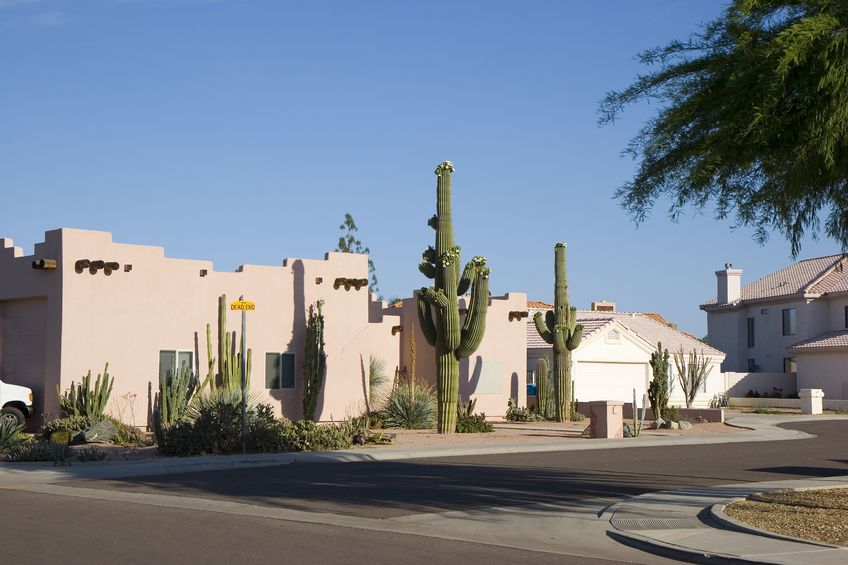
Southwestern-styled homes will traditionally use stucco as a decorative siding and finish to homes. Stucco is a fine plaster coated onto walls wet, which dries with a very grainy texture. This plaster handles great against the desert heat and looks great as well. However, these extreme climates can really wear down and fade the paint on the walls over time. If your paint is beginning to fade, it may be time to repaint the exterior of your home. With stucco being so texture, it can propose several dilemmas. To help, here are some of the best ways to paint stucco:

Prep

Before you are going to start painting, you will need to prep the surface. For the exterior of your home, you will just want to remove all the outdoor dust and dirt that has accumulated on your home. This step can easily be done by spraying your house down with a hose. Let it air dry completely before you begin to paint. Tape off or tarp any areas you do not want the paint to get.

Roller

For stucco, there are generally two main ways of painting. A roller is less effective but generally foolproof. When you get your paint, let the supplier know you will be rolling the paint. This paint will be sold much thicker and can be applied with a roller. You will still need to use a brush for harder areas like corners and edges.

Spray

A more effective technique but takes practice and equipment is spraying the paint onto the stucco. With such an aggressive texture, this will allow you not to have to go over the same spot multiple times, as the roller may. Simply add the paint and spray it directly onto your home. You can keep the spray gun very close to the house because bleeding paint is uncommon with this high of texture.

Stucco is excellent but will need to be repainted after many years of sun exposure. Make sure you can complete the task before starting it. If this seems too far out of your expertise, you may want to consider hiring a professional. For more tips and tricks on home improvement, make sure to subscribe.

Tips & Tricks for Keeping Your Home Smelling Fresh

You can easily master your design, yet if your environment does not smell fresh, your home’s presence can quickly be ruined. You may not be a messy or dirty person; however, our lifestyles can contribute to unwanted odors in our homes. Pets, children, long hours at work, and many other factors can give our rooms a foul scent. You spend too much time making your home beautiful to ruin it with unwanted smells. There are two main ways to tackle this problem: eliminate bad odor and create pleasant ones. Here are some great ways to help enhance the smell of your home:

Drawer Scented Sachets

When clothes and lines sit for extended periods of time, they can start with hold scents. Drawer scented sachets are packets that can be placed at the bottom of all your linen drawers in your home. They can provide a pleasant smell in your drawers and will also help scent your linens.

Scented Dryer Sheets

After washing your clothes and throwing them into the dryer, throw in some scented dryer sheets. Investing in some good fragrance dryer sheets can help put the scent into your clothes. It is especially nice when you wash your sheets. Nothing better than hopping into a lovely lavender-scented bed after a long day at work.

Air Freshener

Air fresheners are another must-have in your home. There are thousands of scents to choose from for your home. Find a scent that you love and apply it to your home. Plus, air fresheners come in a variety of ways to allow them into the atmosphere. You can get a simple spray for manual use or invest in an automatic time-released air freshener. Either way, air fresheners are great for sprucing up your home’s aromas.

Closet Fragrance Freshener

Like your drawer scented sachets, you can also get closet fragrance fresheners. These typically come on a hanger that can be hung in your closet. They are another great way to freshen an area of your home and improve the scent of your clothes!

Candles

Add some warmth to your atmosphere by investing in some candles. Candles are a great way to make your home smell better. Try to find candles that work with your personal taste. You can even invest in seasonal candles like winter scents or spring scents for different times of the year.

Smells can be an essential element to control in your home. Remember, your task is not just to mask smells with new ones. Instead, try to eliminate any unwanted smells in your home first. Additionally, remember to keep your home clean to prevent undesirable odors.

Best Plants to Improve Home Air Quality

Our homes are our safe havens and refuge. They are the spot we can retreat from the rest of the chaotic world; therefore, having our homes be a place of comfort and relaxation is essential, but we also need to consider our health. Air quality is an important attribute that correlates directly with our health. You do not want to go home to a house full of airborne allergens and pollutants after a long day of work. Luckily, having clean air can be as easy as buying some plants for your home. Plants give off oxygen and can help purify your breathing air. Selecting the right plants is ideal for having the best atmosphere. Here are three high-quality plants that can help create better air quality in your home:

Aloe Vera

Aloe Vera is a very versatile plant. It can help remove volatile organic compound pollutants from the air while being beautiful. In fact, these pollutants are unwanted chemicals that are in the air in our homes, so it is important to have them removed. Aloe Vera also can easily increase oxygen levels while minimalizing carbon dioxide in your home. Having a plant like Aloe Vera is great because it is easy to keep alive and low-maintenance.

Chinese Evergreen

Chinese evergreen is a beautiful and colorful plant. It is also low-maintenance and can be watered as little as once a week while growing in low-light atmospheres. Chinese evergreen is known to be an excellent air-purifying plant. Chinese evergreens are great for pulling unwanted toxins from the air. This is an eco-friendly solution to purifying the air around your home or office.

English Ivy

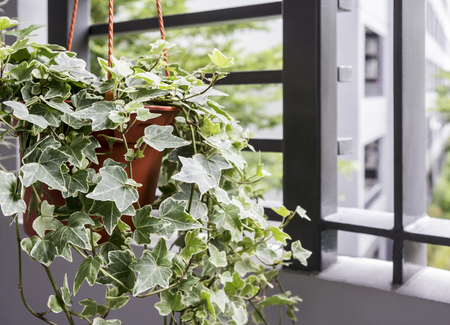
Another option to consider is English Ivy. Typically, hung in baskets, these house plants can grow quite easily in semi-shady atmospheres. English ivy can cleanse benzene, formaldehyde, xylene, and toluene from the air. These solvents can be dangerous to our health. Studies have also proven that English Ivy reduces the chances of mold in your home.

Your air quality should never be overlooked. Investing in some or all of these plants is a significant, proactive step in freshening up your home. Plants have many benefits in enhancing your atmosphere. Make sure you facilitate them!

How to Create Your Home Theater

A home theater is a way of bringing the theatrical experience and premium sound to your own home. This is great for any movie buff or individuals looking to host entertainment. Home theaters offer the convenience of a movie theater in your own home. However, there is more effort that goes into this than just buying a big-screen television. Movie theaters offer premium surround sound and quality comfort. If you have a room you are looking to convert, here are the essentials you are going to need:

Television or Projector

Your initial thought may be to purchase a big-screen television. While televisions can offer many benefits, including smart televisions and crystal-clear picture, you may also want to consider a projector. Quality projectors can provide clear, high-quality images in the size you choose to display them. You can purchase a motorized projector screen or even just paint a wall white and create a fixed frame around the image. First, you will want to consider if you want a 16:9 screen for HDTV and movies or if 2:35. One is more preferred to allow you to watch CinemaScope movies while eliminating the bottom and top black bars.

Speakers, Connection Path, & Media Source

A traditional style for home speaker’s surround-sound is a 5:1 method. This contains five speakers and one subwoofer. The five speakers will be right front, center, left front, right rear, and left rear. You will need some sort of connection path to allow your speakers to communicate with your projector. Some of these can work via Bluetooth or may need to be hardwired. If you are going to need to hardwire your surround sound, make sure you think out the wire path and find the best way to hide exposed wires for a neat finished look.

You will also want to hook up a media source. How do you plan on watching videos? Consider multi-platform options. While Bluetooth is great, you will have to own every movie you want to watch. Options like X-Box or Playstation can create your theater into a smart theater by offering gaming, Hulu, Netflix, Youtube, movie streaming, and more.

Seating

The last element to add to your home theater is seating. Any entertainment room only goes as far as the comfort you can provide. You may want to have gaming chairs closer to the screen, whereas movie seating can be further back in the room. Consider how big your space is and what is the best form of seating. Individual recliners are excellent options but may not be optimal for your space. Study the room and tailor the seating to how it will work with your layout.

Creating a home theater is an excellent home addition. You will use this room for many events when hosting guests and enjoy it for your own personal use. Adding the right form of seating, screening, and audio will all play critical roles in how your room feels. Make sure you have a good understanding of how everything will come together prior to investing in the space. For more tips and tricks on home improvement plans, make sure to subscribe!

Inspiring Design Hacks to Transform Your Patio for Autumn

When it comes to home investments, you may not think of exterior modifications right away, and maybe, it is time to change your way of thinking. Autumn is the season to enjoy the outdoor weather and experience the beauty of change. Hosting outdoor festivities and gatherings is a great way to encapsulate this change through your home. Tailoring your patio for the seasons and adapting to different criteria can be a daunting task at first but the reward is well worth the time invested. As some of the Arizona trees begin to alter their leaves with a crimsons and golds spectacles and the nights grow longer, change is inevitable. We put together three simple fall patio changes worth your investments. Let’s take a look!

Fabulous Firepit

A great social modification to your patio is adding a firepit. Yes, even in Arizona. Plus, there are so many budget-friendly options as well as some very classy, elaborate setups for homeowners to select their favorite. Decide which investment best suits your house, design, and budget. Also, consider the number of people you plan on hosting. If you plan on entertaining large groups, you will want to add more seating to accommodate everyone. Lastly, make sure the firepit is well kept, and no trees are overhead that could catch fire.

Feature Fall Decor

Exterior decor can make a powerful statement outside your home. Adding hay barrels and pumpkins is an easy way to adapt your home for the fall season. Fall is harvest season and adding creative reflections of that around your outdoors can boost your home’s exterior value and fall pride. Try incorporating scarecrows and even decorating for Halloween to add flair. Plus, with Thanksgiving around the corner, it is also an excellent opportunity to add other festive pieces to your design.

Functional Furniture

Make sure you get the proper patio furniture. This is your chance to add your taste and design style outside. The exterior design option can be branched from bar seating to chairs or even stools. Designing your patio with the right seating and furniture is crucial for adapting your patio to become an outdoor hangout. Try buy autumn theme cushions or even a fun fall colored umbrella to help amplify your seasonal pride. Make sure you have different gathering spots and tailor your patio to accommodate the events you may host. You may also want to get a grill or set up an outdoor kitchen to make cooking and serving easier outdoors.

Investing in your patio this season is a great way to improve your home. It shows you care about your home and take pride in even the exterior.