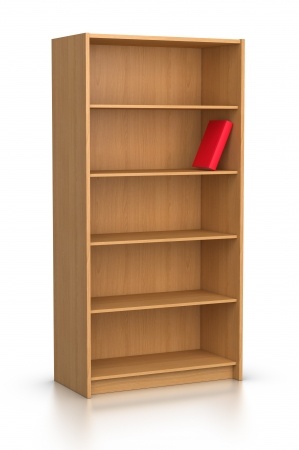
Design Tips: Setting up your Bookshelves

12728460_SAs you finish unpacking, do you find yourself staring at those empty bookshelves, unsure of how to tackle filling them so that they are attractive and functional? It may seem a bit overwhelming, but take it in stages and you will find it easier and maybe even fun. Let’s start with a question:

Do you have a lot of books? If the answer is yes, then your goal is to plan your shelves to showcase your nicest hardcovers in your main living area. While you want to keep your books organized, hardcover books will look the nicest on a shelf.

If you have only a few books, then you can still make your shelves attractive. Start by pulling together any larger decorative baskets or boxes that will fit on your shelves. Scatter these and your books in an evenly-balanced way throughout the shelf space.
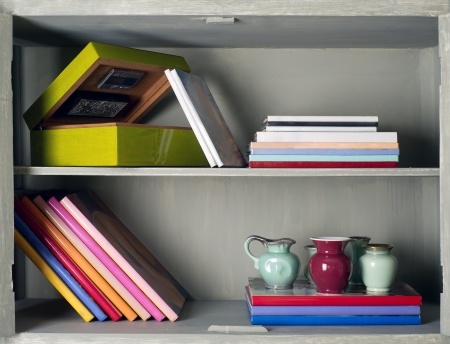
16564260_SDon’t limit your book directions to vertical. The books in this photo to the right are set slanted and horizontal. Some are even used as a base for smaller vases and pitchers. Look at placing your largest books horizontally on the lowest shelves. This will ground the arrangement while still making them accessible.

This photo also shows an open box. Play with your boxes and baskets to see if different angles or directions make the shelves look more interesting.

Next, add any photos or artwork. You may want to place these around eye level so people don’t have to strain to see them. Experiment with putting a photo or drawing against the back of the shelf with something else in front of it. Take advantage of your shelves’ depth.
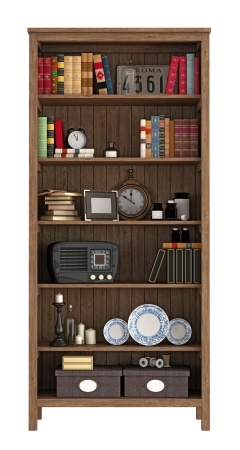
17478352_SThis last photo shows a completed bookshelf. While it is a bit busy, you can see lots of good options for making your shelves interesting. Two larger boxes anchor the bottom of the shelves and books alternate with various accessories. The third shelf down demonstrates the power of layering and using different angles.

You may find yourself making changes and additions over time. That’s a good thing. Your shelves announce your interests and tastes to visitors, so have fun and experiment until you’re satisfied – for now!
Design Tips: A bit of Nature

14892527_SIn our last blog we mentioned that the plant provided a welcome diagonal element, but it also provides something else – a natural element to expand the décor.

By including a bit of nature in your home’s décor, you bring the outside in, add texture and color and connect your home with the world.

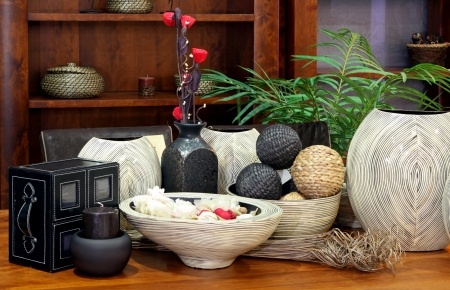
Don’t limit your thinking to houseplants. If you have a brown thumb, you can rely on dried plants, fresh flowers or other natural elements such as the bundle of grasses laying on the table in the photo above.

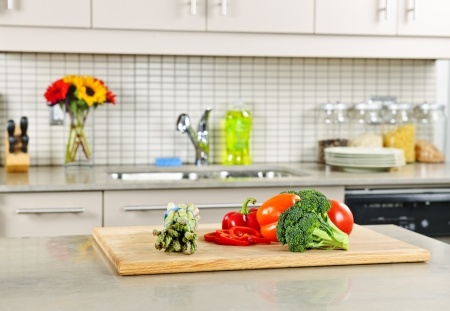
8089534_SThe kitchen to the right comes alive thanks to the fresh flowers and vegetables on the counter. And although these items are only temporary additions, notice the glass jars of rice and other dried items on the back counter. These provide ongoing natural elements in the room.

As you can see a touch of nature warms up a space and adds personality and interest. You can choose seasonal natural elements if you wish to keep your home even more in tune with nature.

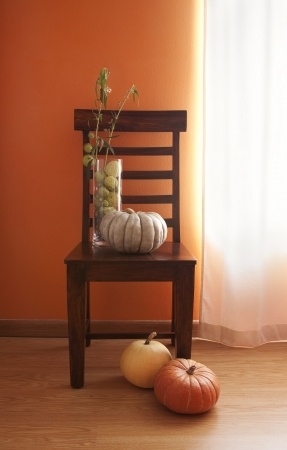
8437116_SYou don’t have to go overboard to make a statement, and don’t limit yourself to tables and counters. Take a look at how this chair creates a fall image with the addition of just a few pumpkins and some dried foliage. The chair and glass vase may be everyday design elements, but by adding the seasonal natural touches, autumn is present in the home.

2655244_S

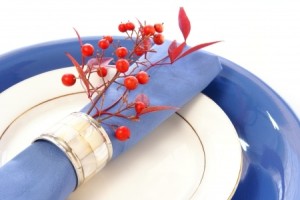
One final point: think small as well as large when adding a touch of nature. This table setting moves from standard to special with a bit of nature tucked into the napkin ring. It’s up to you to let nature to inspire you to add this type of special touch to your home.


Design Tips: Balancing Heights

22021044_SWhen displaying anything – accessories on a side table, a buffet for a party, birthday or wedding presents, the impact is much stronger if you vary heights.

Designers know that getting the right balance of heights makes any visual more dramatic and interesting.

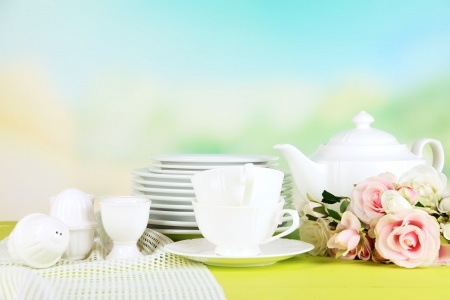
Let’s start with the photo above. The colors of pink and citrus green contrast nicely with the white china and the fabric to the left provides some textural interest. But notice that the difference between the tallest and shortest element is only a few inches. This pretty picture has charm but really doesn’t engage the eye.

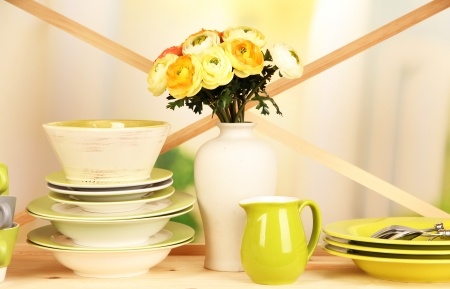
21556061_SIn contrast, take a look at the photo to the right. The colors are actually slightly more limited, but the eye flies across the image thanks to several design choices.

To begin with, the height differential is almost a foot between the lowest and highest elements. The crossed ribbons in the background emphasize the height differences while pulling attention from one part of the image to the next.

14892527_SNow you may have no reason to stack your plates and bowls, but you can use this same concept with accessories in any part of your home. In this last photo, the same concepts are applied to the accessories on a side table.

The grasses lying horizontal against the table are over a foot lower than the red flowers that top the vertical vase. The chair backs and the bookshelf in the background provide strong horizontal lines, so the verticals need to come from the accessories.

Finally, notice how the plant provides some nice diagonals to draw the eye the same way the crossed ribbons did in the second photo above. The look is completely different, but the same design concepts combine to make both arrangements powerful and eye-catching.

Design Tips: Like with Like

10593053_SDo you have a collection – either small or large – that you value? If so, think about finding a way to display it in your home with flair.

One fundamental design rule is to position like objects together: like with like. But don’t limit your thinking to only combining things that are exactly the same. Like can mean from the same period of time, in the same color or colors, the same shape, the same theme, or anything you can discover that makes a connection.

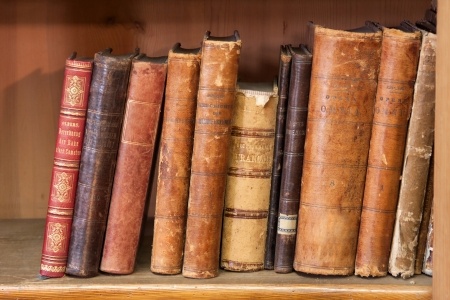
Now, the old leather-bound books shown above are together, but they don’t have much of a chance to make a statement sitting on a bookshelf.

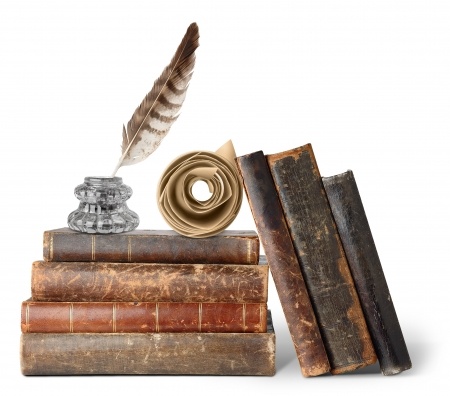
7786742_STake a look at about the same number of books combined with a roll of older paper, an old inkwell and a feather that could be a quill pen. By combining the books with other items related to writing from approximately the same era, they change from a few interesting bindings to a design statement.

For small items or things that you don’t mind people playing with, look for interesting ways to build displays that use more than the sense of sight. For example, set music boxes or wind-up toys together on a table with a little note that says, “Please touch.”

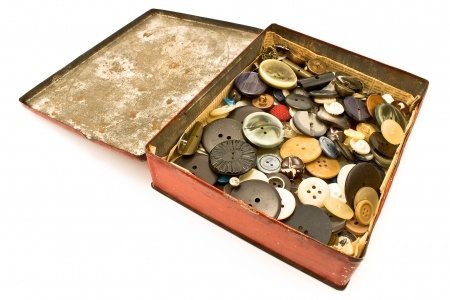
10847524_SMaybe you have your grandparents’ old collection of buttons or marbles tucked away in a closet. How about pulling them out and placing them in a container that fits the time those buttons or marbles were used? Set them on a side table next to a favorite spot for your visitors to sit, and you may have created an interactive accessory that your guests will really enjoy. For example, by setting the buttons in the photo in an open old tin box, you encourage people to stop, look, and touch the different materials, sizes and shapes.

These are just a few ideas. Now, when you draw on that designer tip of “like with like,” stretch your imagination to create home accessories that are as unique and interesting as you are.